Dive into the world of nature and science as we explore the Top 10 most popular resources from the Australian Environmental Education website. Since its launch in 2019, this hub has become a cornerstone for teachers, parents and curious minds looking to understand the intricate systems that sustain our planet.
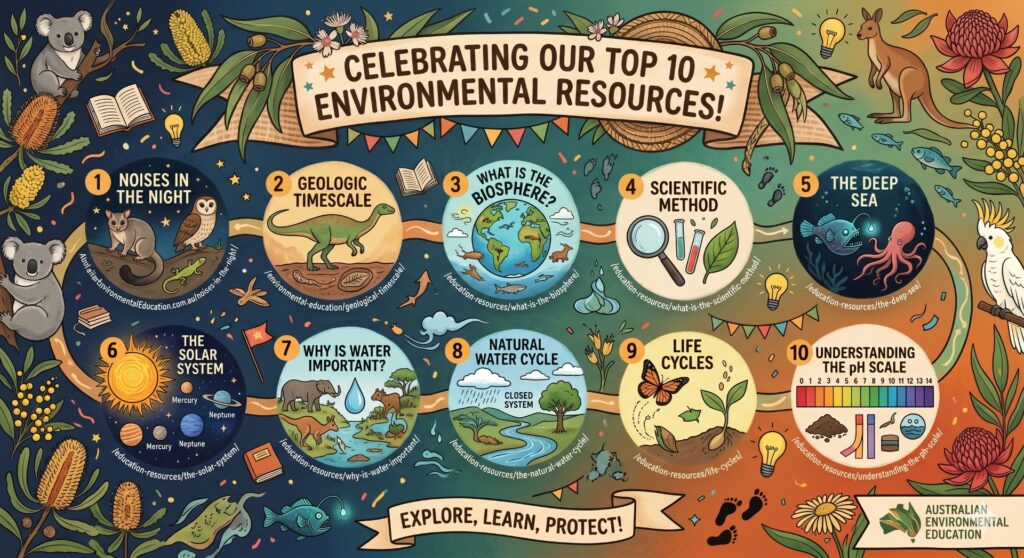
Here is a summary of the top 10 pages that are help us all to see the world around us.
1. Noises in the Night
Ever heard a screech in the dark and wondered what is was? This guide decodes the Australian night, helping you identify nocturnal neighbors like Owls or the rhythmic clicking of a frog.
2. The Geologic Timescale
To understand the Earth, you have to think big, millions of years big. This resource breaks down the planet’s history into eras and periods, mapping out when dinosaurs arrived and when Australia’s famous contenient appeared.
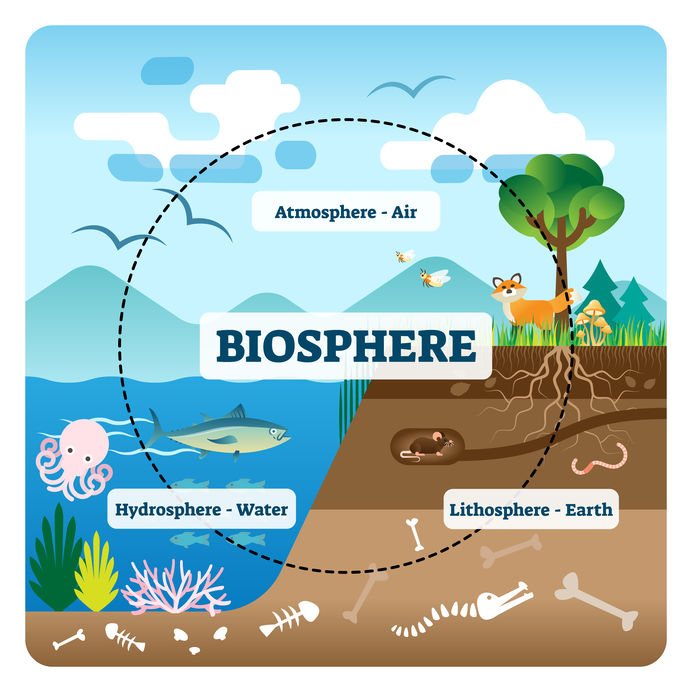
3. What is the Biosphere?
The biosphere is the thin “layer of life” wrapped around our planet. This page explains how the air (atmosphere), water (hydrosphere), and land (lithosphere) work together to keep us alive.
4. What is the Scientific Method?
Science isn’t just about knowing things; it’s about finding out. This page provides a clear roadmap for any experiment; from forming a hypothesis to drawing a final conclusion.
5. The Deep Sea
The “Abyssal Zone” is Earth’s final frontier. This summary explores the strange animals that live under crushing pressure and in total darkness, highlighting why we must protect our oceans.
6. The Solar System
Looking up is just as important as looking down! This guide covers our cosmic neighborhood, from the rocky inner planets to the gas giants. It explores how Earth’s specific position in the “Goldilocks Zone” allows life to flourish while our neighbours remain barren.
7. Why is Water Important?
In the driest inhabited continent on Earth, water is everything. This page explores why water is essential for every living cell and how it regulates the temperature of our entire planet.
8. The Natural Water Cycle
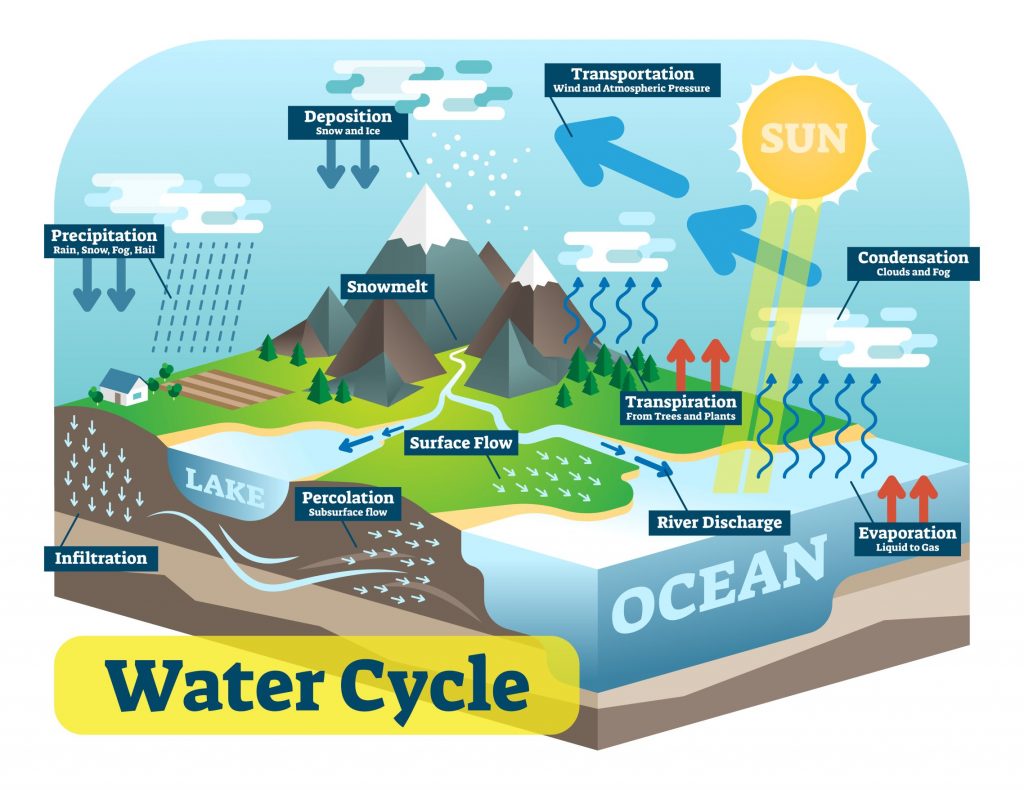
Did you know you’re drinking the same water the dinosaurs did? This resource explains the “closed system” of evaporation, transpiration, and precipitation that keeps our water moving in a never-ending loop.
9. Life Cycles
From a caterpillar’s transformation to metamorphosis of a frog, this page explores the diverse ways life begins, grows, and reproduces. It’s an essential resource for primary school students learning about the continuity of life and the different strategies animals use to survive.
10. Understanding the pH Scale
Chemistry is at the heart of the environment. This resource explains the pH scale—the measure of how acidic or alkaline a substance is. From the acidity of our oceans to the pH of the soil in your garden, this scale helps us monitor the health of our ecosystems.
Why These Topics?
These 10 pages alone have been viewed 615,000 times. The popularity of these pages shows that we are more curious than ever about how our world works. By understanding nature and science we become better equipped to protect the environment for the future.
Which of these is your favourite? Dive deeper into the full articles over at the Australian Environmental Education website