
Climate change refers to long-term shifts in global or regional climate patterns—specifically changes in average temperatures, rainfall, wind patterns, and the frequency of extreme weather events over decades or centuries. To understand climate change, it helps to separate it into a few key concepts.
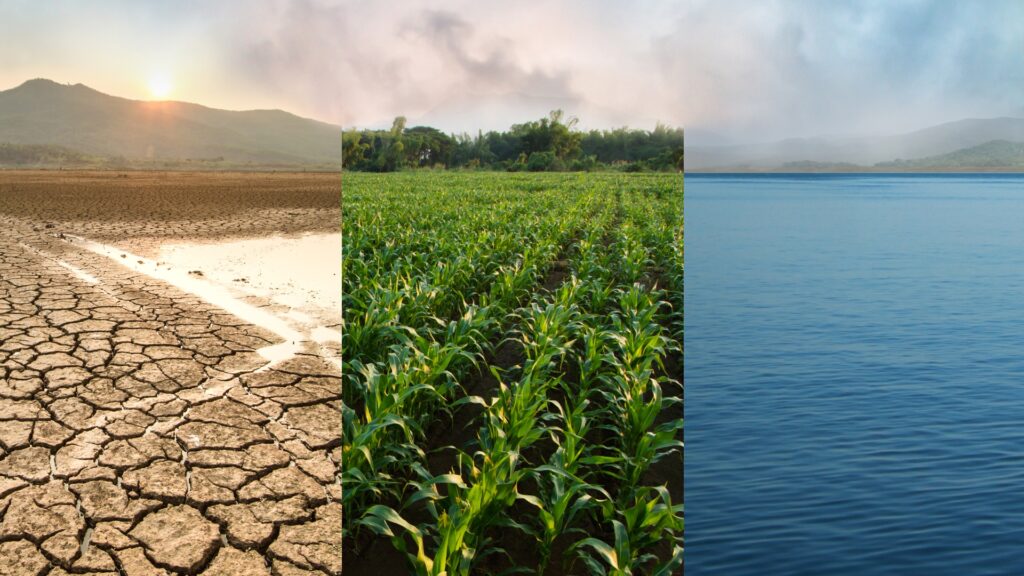
Weather vs. Climate
- Weather is what happens day-to-day outside your window (e.g., a rainy afternoon, a chilly morning, or a heatwave this week).
- Climate is the long-term pattern and average of weather over a long period (typically 30 years or more).
Natural Cycles vs. Modern Climate Change
Earth’s climate has fluctuated naturally throughout its 4.5-billion-year history due to volcanic eruptions, solar activity, and natural shifts in Earth’s orbit (bringing ice ages and warmer interglacial periods).
Modern climate change—the rapid warming observed since the late 19th century—is fundamentally different because it is driven overwhelmingly by human activities.
The Greenhouse Effect
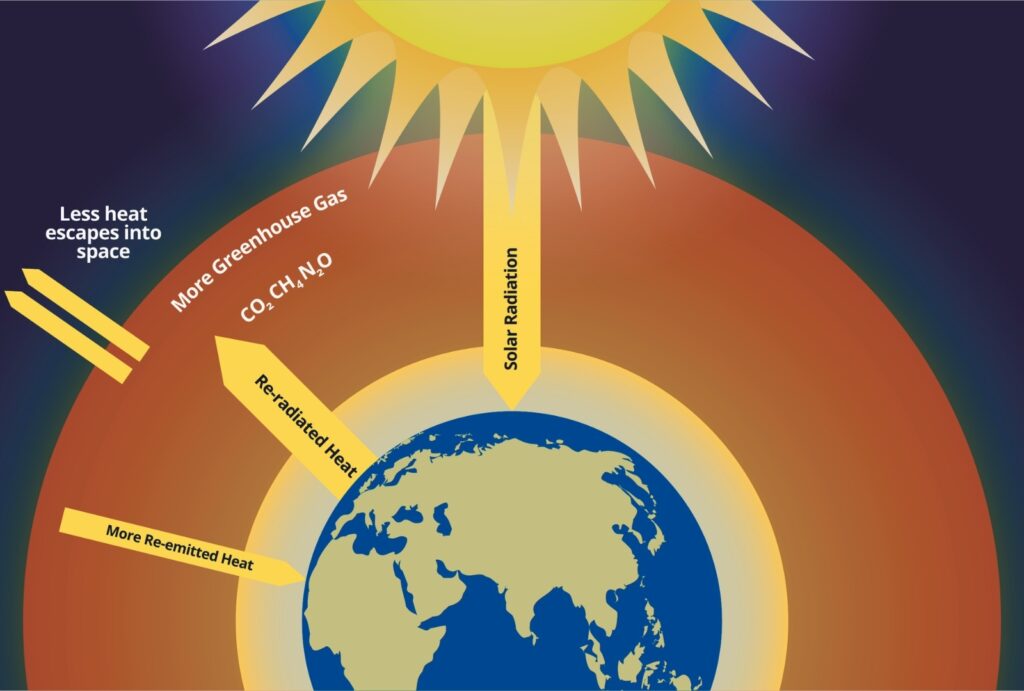
- Earth’s atmosphere naturally contains gases (like carbon dioxide, methane, and water vapor) that trap heat from the sun, keeping the planet warm enough to support life.
- Since the Industrial Revolution, humans have burned huge amounts of fossil fuels (coal, oil, and gas) for energy and cleared vast forests.
- This releases billions of tons of additional greenhouse gases into the atmosphere. Think of it like adding a heavy, extra blanket around the Earth—less heat escapes into space, causing the planet’s average temperature to rise.
Key Effects Observed Globally
- Rising Temperatures: Global average surface temperatures have increased significantly over the last century.
- Warming and Acidifying Oceans: Oceans absorb over 90% of excess heat, affecting marine habitats and altering ocean currents.
- Melting Ice and Sea Level Rise: Glaciers and ice sheets (in Greenland and Antarctica) are melting, contributing to higher sea levels and coastal erosion.
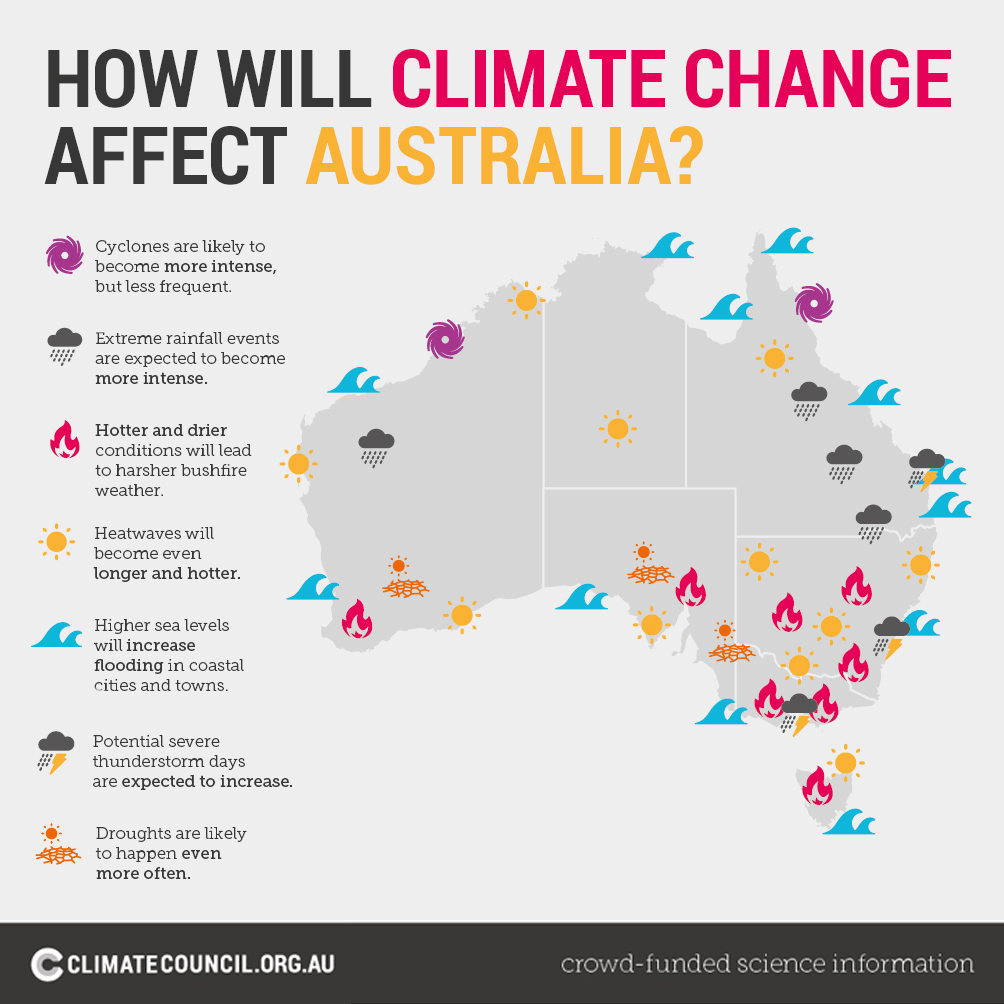
- Shift in Extreme Weather: Increases in the frequency and intensity of severe droughts, heatwaves, heavy rainfall, and bushfires.
Core Climate Stressors in the Australian
Australia’s geographic isolation has fostered highly specialised, endemic biodiversity. Because these species have evolved within specific environmental parameters, minor shifts in temperature, water availability and seasonal indicators can trigger widespread ecological disruptions.
- Ocean temperatures around the Australian continent have risen steadily, causing more frequent, intense, and prolonged marine heatwaves.
- Rainfall patterns are increasingly volatile, characterized by protracted drought periods punctuated by severe, unseasonal flooding.
- Rising temperatures compound with urban hard surfaces (concrete, asphalt) to create highly localised zones of extreme heat stress, (Urban Heat Islands) particularly in expanding areas like Western Sydney.
Ecosystem Impacts
| Ecosystem | Primary Climate Driver | Observed Impacts & Key Examples |
| Marine Reefs | Elevated Ocean temperatures & Strengthening Currents | Mass coral bleaching across the Great Barrier Reef; loss of canopy-forming kelp forests along the Great Southern Reef. |
| Freshwater & Wetlands | Volatile rainfall & unseasonal heatwaves | Premature drying of ephemeral ponds; disruption of seasonal breeding cues for native amphibians. |
| Terrestrial Bushlands & Urban Spaces | Rising ambient temperatures & Urban Heat Islands | Acute heat stress on native flora and fauna. |
Ultimately, while climate change presents significant global challenges, understanding the underlying science is our most powerful starting point for meaningful action. By observing our local environments—whether tracking backyard biodiversity, creating native wildlife habitats, or contributing to citizen science programs like FrogID—we can transform climate awareness into practical stewardship. Protecting Australia’s unique ecosystems doesn’t require grand gestures overnight; it begins with curiosity, hands-on learning, and the collective choices we make in our own communities every single day.