Water for Wildlife

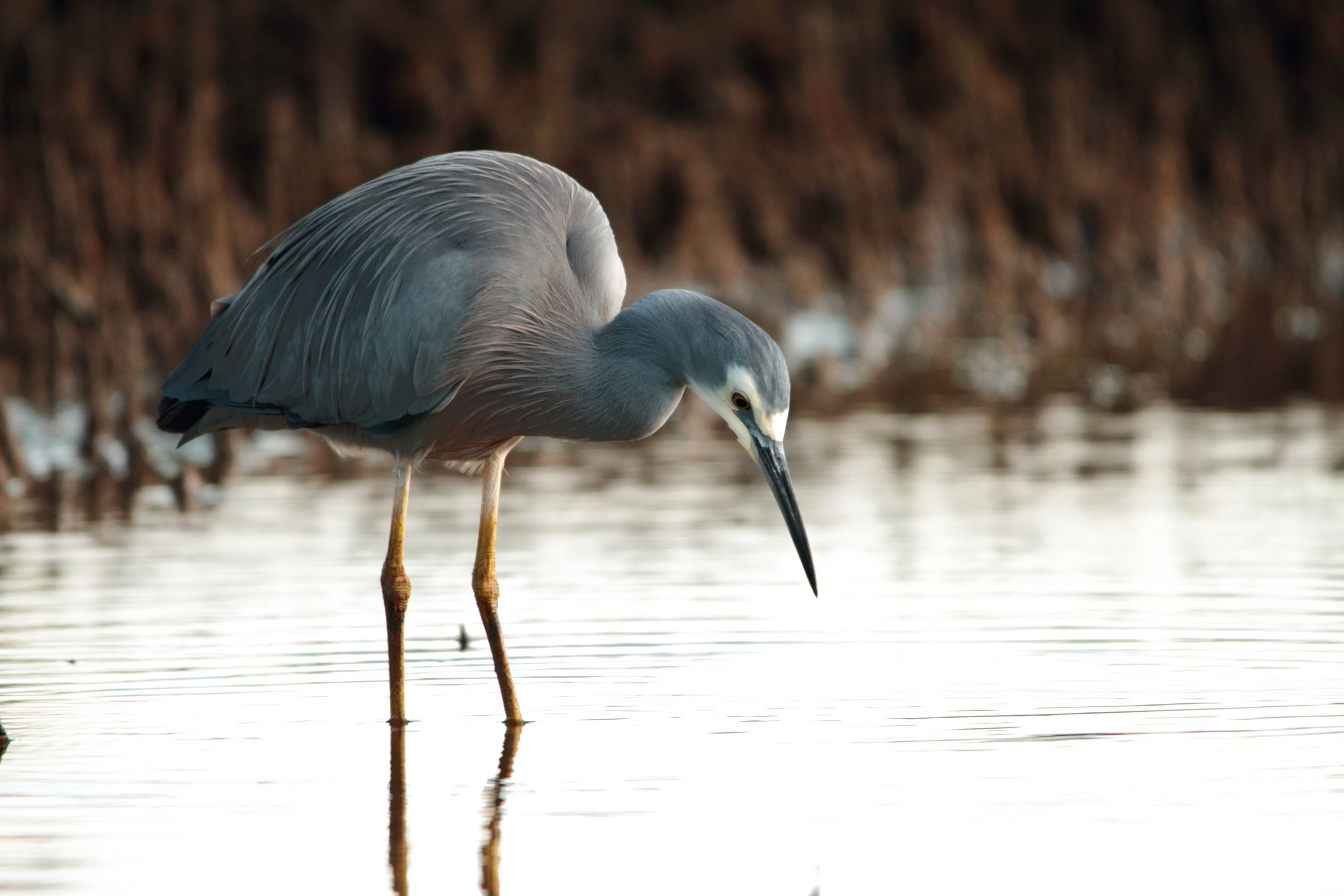
Australia is renowned for its beautiful, sunny summers but with that comes the reality of heatwaves. We can retreat indoors or cool off in a pool, our incredible native wildlife isn’t always so fortunate. Extreme temperatures can be devastating, leading to dehydration, heat stress, and even death for many animals.

Just like humans, animals need consistent access to water to regulate their body temperature and maintain essential bodily functions. During a heatwave natural water sources can dry up quickly, leaving animals vulnerable. They might have to travel long distances in extreme heat to find water, expending precious energy and increasing their risk of heat stress. Providing accessible water points can significantly reduce this struggle.
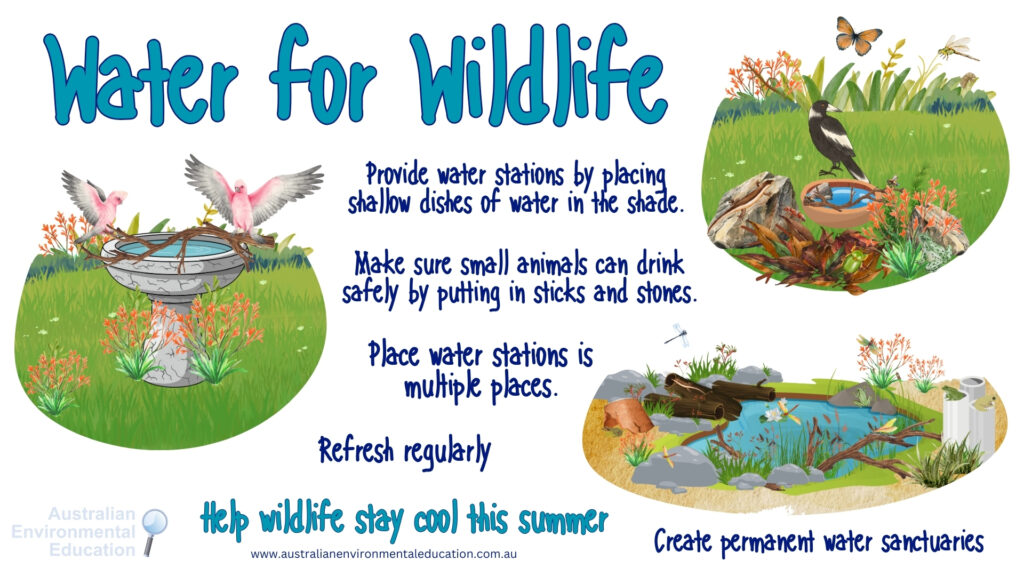
Water for Wildlife during heatwaves. 
- Provide water stations in the shade
- Add sticks and stone, so small animals can drink safely 
- Refresh the water regularly

You Can Help Our Wildlife This Summer:

Provide water stations:

  • Refresh daily: Always use fresh, clean water. Stagnant water can become a breeding ground for bacteria and mosquitoes.
  • Clean regularly: Scrub dishes thoroughly to prevent algae and pathogen build up.
  • Place in multiple spots: Offer several water sources in different locations. This helps reduce competition and caters to animals with varying preferences or territorial ranges. Consider placing some in shaded areas and some in more open spots, ensuring visibility.

Use shallow dishes & rocks:

  • Safety first: Opt for shallow dishes or bowls to prevent smaller birds and mammals from drowning. A ceramic plant saucer is often ideal.
  • Add rocks or pebbles: Place a few rocks or stones in the dish. This provides a safe perch for birds to drink without getting fully submerged and offers an escape route for insects and small creatures if they fall in.
  • Avoid deep containers: Buckets or deep pet bowls can be dangerous drowning hazards for smaller animals.

Offer shade:

  • Natural cover: Plant native trees and shrubs in your garden to provide natural shade and cooler resting spots.
  • Artificial shade: If you don’t have ample tree cover, consider positioning a large umbrella, a piece of old tin, or even a shade cloth near your water station. This allows animals to drink and rest in cooler conditions, away from direct sunlight.

    We all can make a difference by taking these simple steps in our backyard and local area. you can provide vital support and help our wildlife survive the scorching summer months. Remember, every drop of water and every patch of shade can make a world of difference to an animal fighting for survival.

    Uncropped AEE logo with dragonfly icon

    Riverfest 2025

    Celebrate World Rivers Day with me for Riverfest at Parramatta Park. Riverfest is the Parramatta River Catchment Group’s annual event – celebrating the Parramatta River and surrounding creeks and environment!

    I will be delivering FREE live virtual excursions on Monday 22 September.

    trivia

    Water and the Environment Trivia FREE live Virtual Excursion at 1pm on Monday 22 September

    Book Now

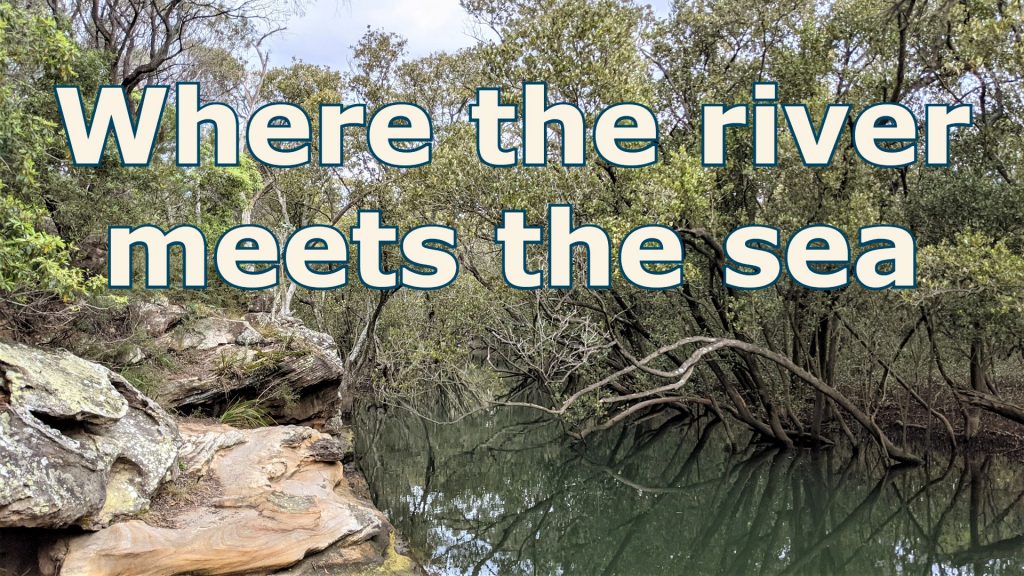
    Where the river meets the sea title slide

    FREE live Virtual Excursion at 2pm on Monday 22 September

    Book Now

    If you are in Sydney you can join me at RiverFest  at Wistaria Gardens in Parramatta Park on Saturday 20 September.


    A river is a natural watercourse flowing towards an ocean, sea, lake or another river. In some cases, a river flows into the ground and becomes dry at the end of its course without reaching another body of water.

    Find out more about Rivers

    Australian Environmental Education logo with dragonfly

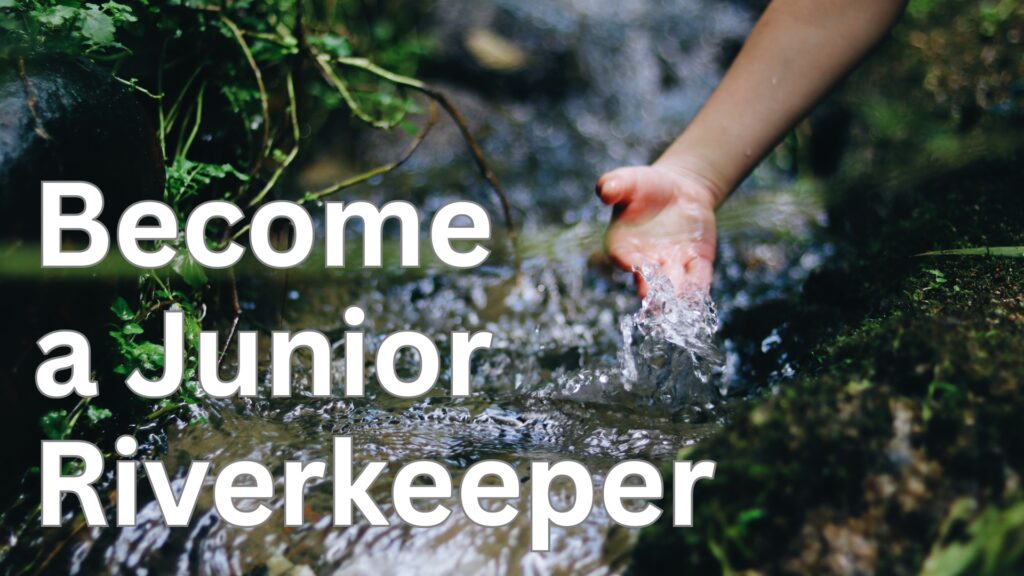
    Junior Riverkeeper

    Become a Junior Riverkeeper these school holidays!

    Get ready for 90 minutes of fun and adventure! You’ll follow animal clues, listen for mystery sounds, and discover how to protect the amazing creatures that live in our rivers. Go on a nature walk, explore different habitats, and learn how you can help protect our rivers through citizen science!

    Perfect for school-aged kids who love the outdoors and care about the environment.

    Junior Riverkeeper dates and times:

    Wed 9th July 10-11.30am 

    Wed 9th July 1-2.30pm

    Wed 16th July 10-11.30am

    Wed 16th July 1-2.30pm 

    Location: Weil Park Scout and Community Hall, Woolwich NSW 2110, Australia

    What to bring: comfy shoes, a hat, and a water bottle — we’ll be moving, exploring, and having loads of fun!

    Uncropped AEE logo with dragonfly icon

    World Wetlands Day 2025

    World Wetlands Day is celebrated on 2 February every year. It is time for everyone to understand the importance of wetlands. This years theme is Protecting Wetlands for Our Common Future. Wetlands are areas of land saturated or flooded with water permanently or seasonally. There are a variety of wetlands including:

    • Coastal wetlands: saltwater marshes, estuaries, mangroves, lagoons, coral reefs
    • Inland wetlands: marshes, peatlands ponds, lakes, rivers, floodplains, swamps, fens
    • Human-made wetlands: fish ponds, reservoirs, saltpans
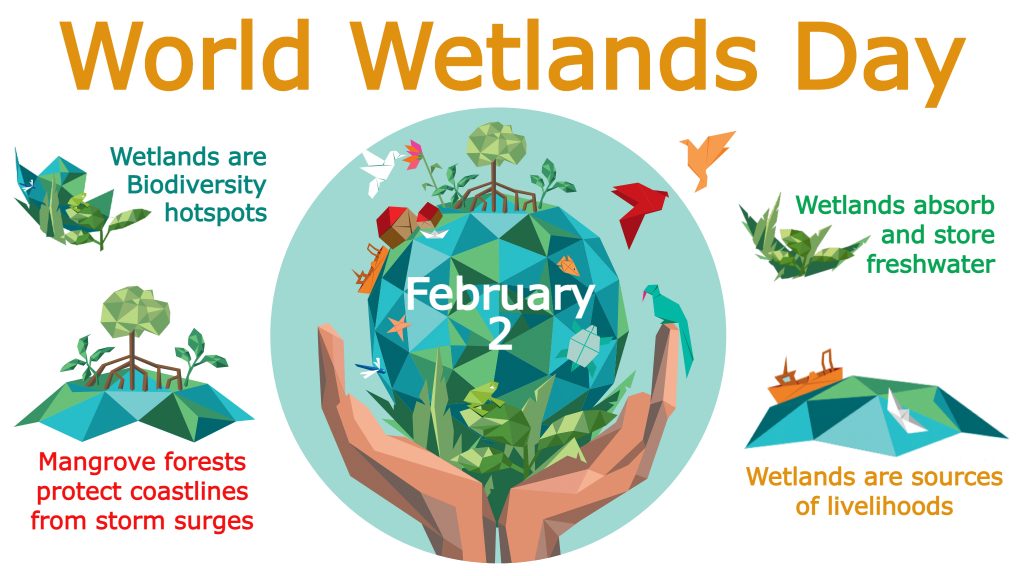
    World Wetlands Day inforgraphic

    Wetlands are among the most productive ecosystems on Earth, providing essential services such as:

    • Water purification – Wetlands filter pollutants, improving water quality for both wildlife and humans.
    • Flood control – They absorb excess rainfall, reducing the impact of extreme weather events.
    • Biodiversity hotspots – Wetlands are home to countless species, from birds and fish to insects and amphibians.
    • Climate resilience – They store carbon, helping mitigate the effects of climate change.

    Despite their importance, wetlands are disappearing three times faster than forests due to urban development, pollution, and climate change. By understanding and protecting these ecosystems, we can secure the future of our water resources and biodiversity.

    In Australia there are 66 Ramsar sites wetlands of international importance covering about 8.3 million hectares. These sites include iconic wetlands such as Kakadu National Park, Roebuck Bay, Gippsland Lakes, Moreton Bay, Blue Lake, Macquarie Marshes and the Coorong.

    The main threats to wetlands in Australia are:

    • river regulation and water diversion
    • land reclamation and development
    • catchment disturbance
    • introduction of weeds and pest animals
    • climate change

    This World Wetlands Day, take action to support wetland conservation:

    • Visit a local wetland – Explore these unique habitats and learn about the species they support.
    • Participate in a clean-up – Join a community group to remove litter and improve wetland health.
    • Plant native vegetation – Help restore wetland areas by planting trees and aquatic plants.
    • Educate others – Share knowledge about the importance of wetlands in classrooms and online.

    I’m based in the Central Coast in NSW and it is surrounded by a number of estuaries and coastal lagoons, from Lake Macquarie in the north to the Hawkesbury River in the south. Within the Central Coast it is estimated there are about 870 hectares of mangroves, 190 hectares of saltmarsh and 1,780 hectares of seagrass. 

    Find a wetland near you to explore this weekend!

    Join us in celebrating World Wetlands Day 2025 by taking steps to protect these vital ecosystems. For more information and resources, visit https://www.worldwetlandsday.org and follow us for upcoming events and activities!

    Check the health of your local wetland with the Wetland Audit.

    Let’s work together to ensure a sustainable future for our wetlands and water resources!

    Australian Environmental Education logo with dragonfly

    World Rivers Day

    World Rivers Day is a celebration of the World’s Waterways! It highlights the many values of our rivers, strives to increase public awareness, and encourages the improved stewardship of all rivers around the world. Rivers in virtually every country face an array of threats, and only through our active involvement can we ensure their health in the years ahead.

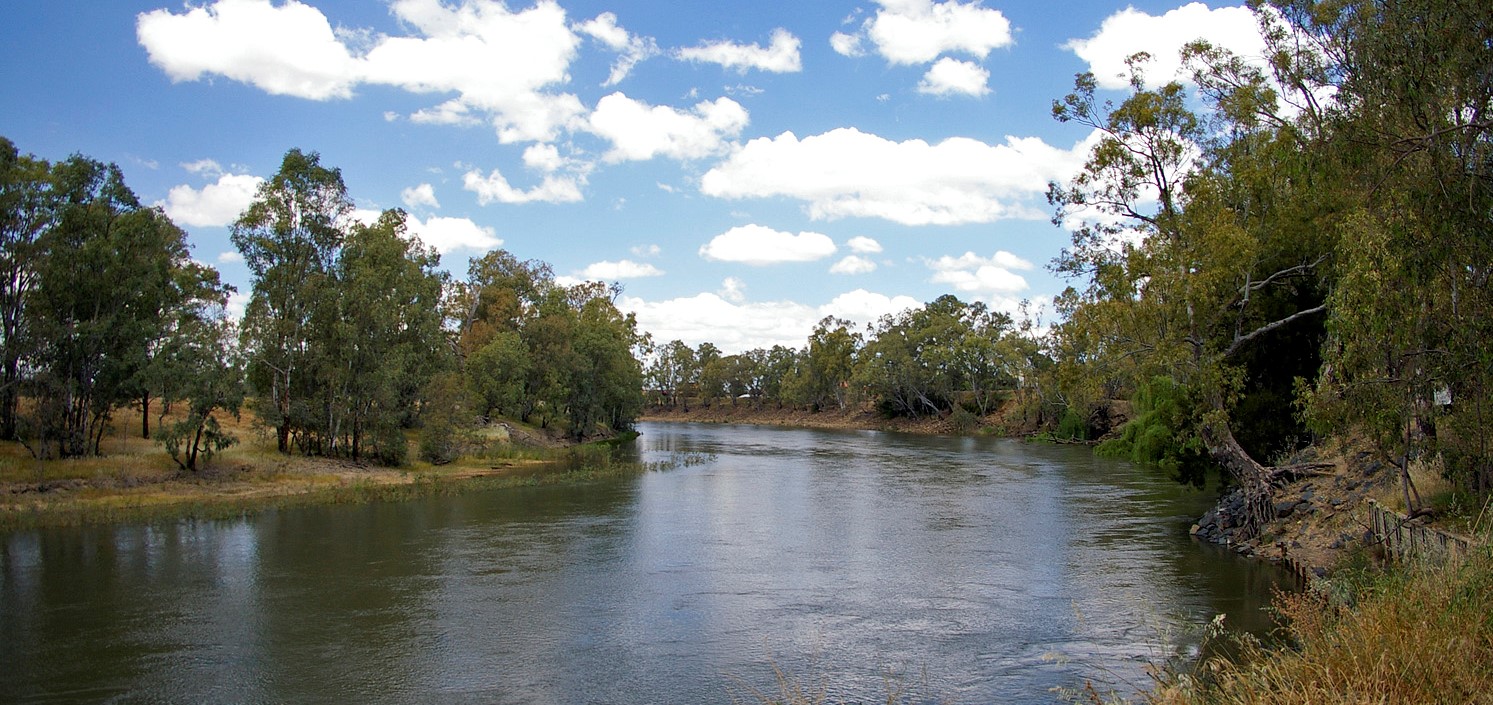
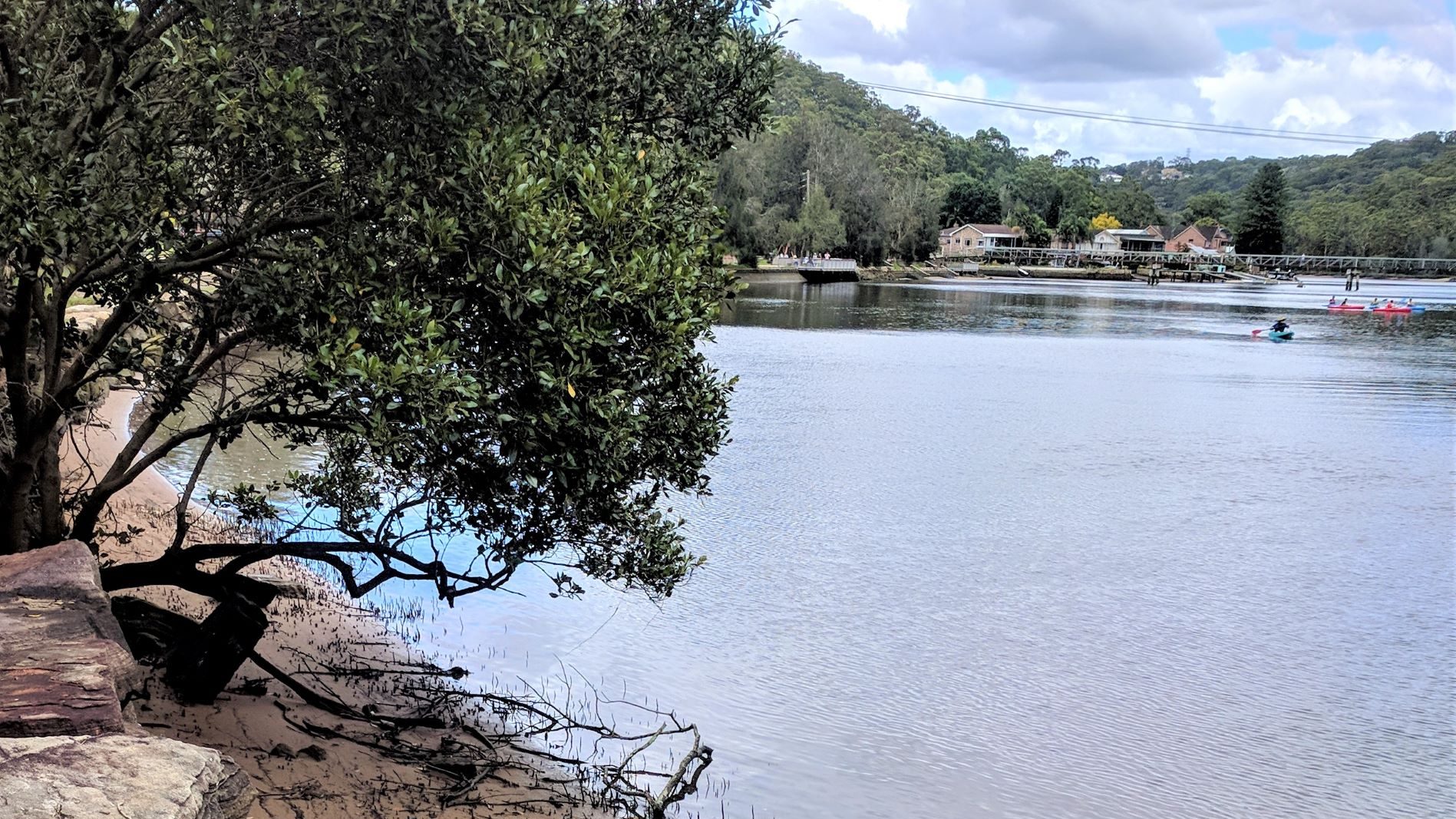
    Murrumbidgee river
    Murrumbidgee River © Bidgee

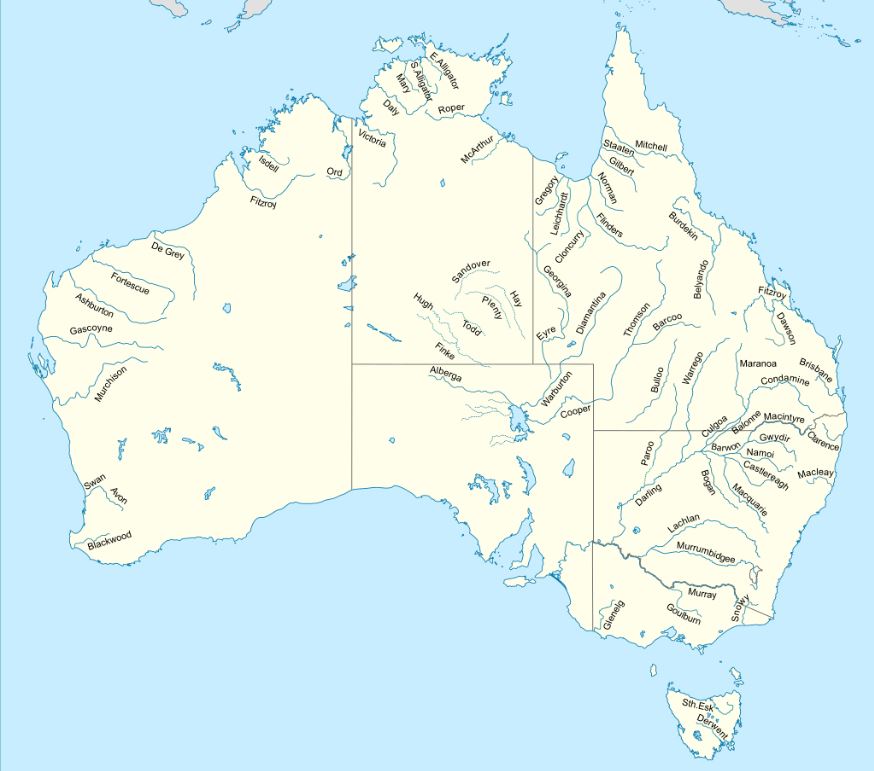
    Australia has 439 rivers, many of these rivers are quite small and are tributaries that flow into larger rivers.

    Image copyright: Summerdrought

    Celebrate World Rivers Day with me for Riverfest. Riverfest is the Parramatta River Catchment Group’s annual event – celebrating the Parramatta River and surrounding creeks and environment!

    I will be delivering FREE live virtual excursions on Thursday 26 and Friday 27 September. If you are in Sydney you can join me at the Paint the River on World Rivers Day event at Paramatta Park on Sunday 29 September.

    Where the river meets the sea title slide

    FREE live Virtual Excursion at 2pm on Thursday 26 September

    trivia

    Water and the Environment Trivia FREE live Virtual Excursion at 1pm on Friday 27 September


    A river is a natural watercourse flowing towards an ocean, sea, lake or another river. In some cases, a river flows into the ground and becomes dry at the end of its course without reaching another body of water.

    A catchment is an area where water is collected by the natural landscape. A catchment is usually surrounded by hills or mountains. Gravity causes rain, melting snow and other water in the catchment to run downhill where it flows into creeks, rivers, lakes and eventually the ocean. The water that seeps below ground and settles in the soil and the space between rocks is called groundwater.


    Australian Environmental Education logo with dragonfly

    World Water Day 2024

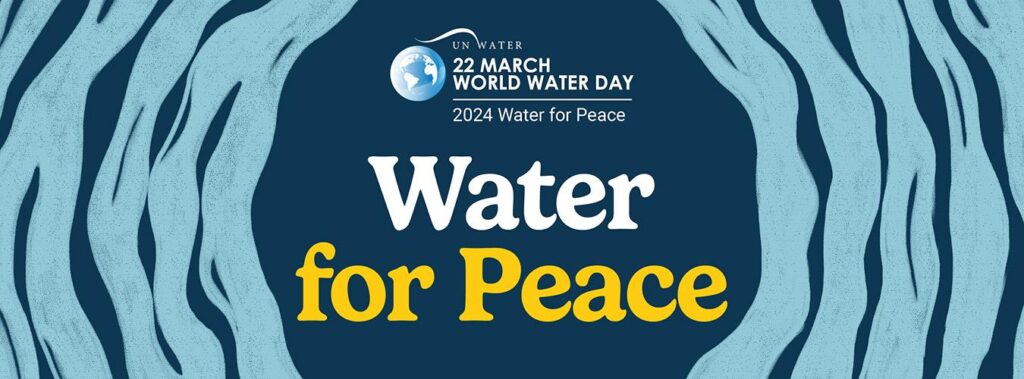
    Today is World Water Day, the 22 March highlights the importance of freshwater. The day is used to promote the sustainable management of freshwater resources. This years theme of World Water Day 2024 is ‘Water for Peace’.

    World Water Day 2024 banner

    Water is essential for all life and is the most abundant substance on Earth, yet water scarcity is one of the biggest issues facing us today. Australia is the world’s driest inhabited continent and 2019 was on of the the hottest and driest year on record. Because of many years of dry conditions, the drought worsened in 2019, resulting in Australia’s driest year on record. With area-average rainfall of just 277.6 mm almost the entire continent was in drought.

    However in many part of the world, Water can create peace or spark conflict. When water is scarce or polluted, or when people have unequal, or no access, tensions can rise between communities and countries. More than 3 billion people worldwide depend on water that crosses national borders. Yet, only 24 countries have cooperation agreements for all their shared water.

    As climate change impacts increase, and populations grow, there is an urgent need, within and between countries, to unite around protecting and conserving our most precious resource. Public health and prosperity, food and energy systems, economic productivity and environmental integrity all rely on a well-functioning and equitably managed water cycle.

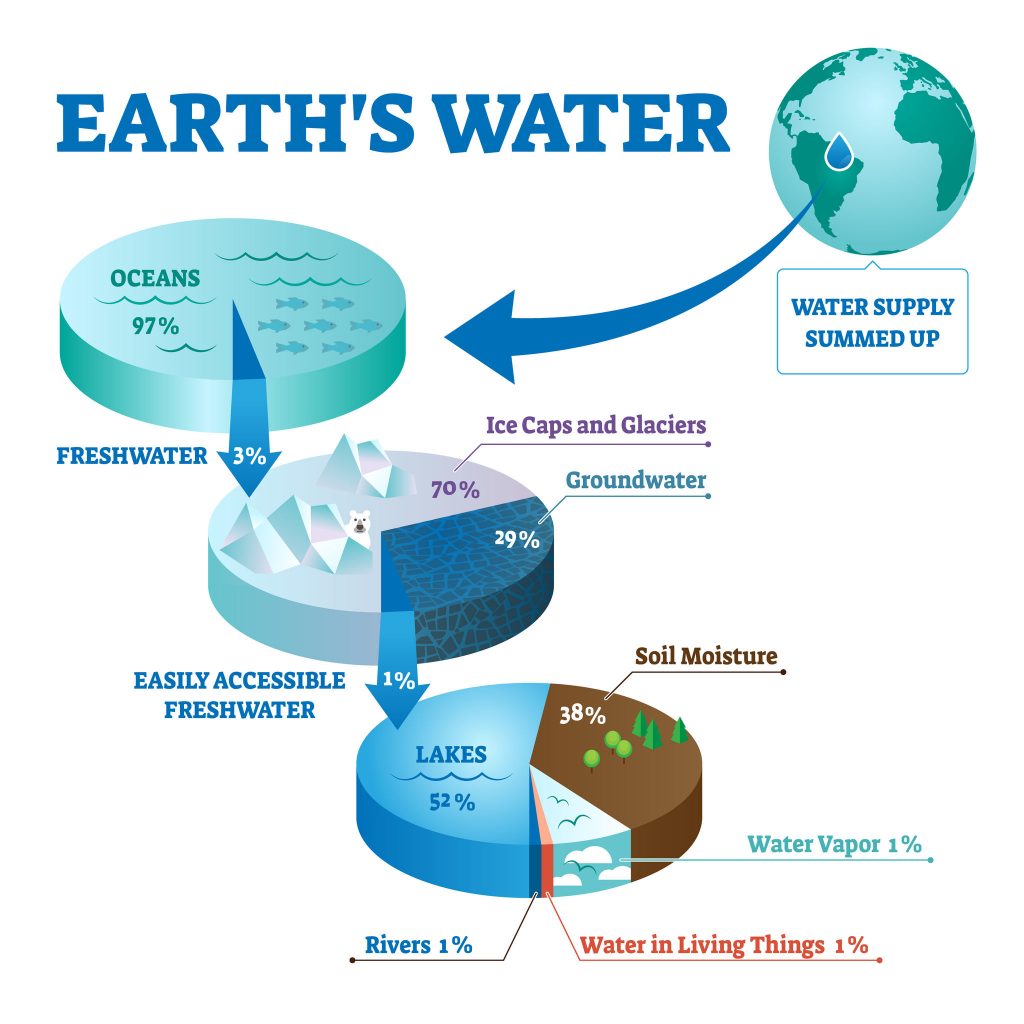
    Even through water covers 75% of the earth’s surface, only a very small amount is freshwater that can be used directly by people, animals and plants. This is because:

    • 97% of this water is in oceans and is too salty for people, animals or plants to use
    • 2% is frozen at the north and south poles, in glaciers and on snowy mountain ranges
    • Only 1% is avaiable as freshwater in rivers, lakes and groundwater.
    Earths water vector illustration. Labeled global liquids ecosystem scheme. Environmental fresh
    Earths water: ocean, river, sea and groundwater ©: normaals

    This World Water Day think of how you can use water more wisely in your daily life. Below is some information to help you get started.

    How to be Waterwise

    Water is essential for all life and is the most abundant substance on Earth, yet water scarcity is one of the biggest issues facing us today. Australia is the world’s driest inhabited continent and 2019 was the hottest and driest year on record

    The Urban Water Cycle

    The natural water cycle has been modified by people to ensure a constant water supply and the safe disposal of wastewater. The Urban Water Cycle incorporates the Water Supply System, Wastewater system and the Stormwater system.

    Why is Water Important

    Water is the most common substance found on earth, so why is it important? Water is essential for all forms of life and can dissolve nearly anything. It can exist as a gas (water vapour and steam), a liquid (water) and a solid (ice).

    Australian Environmental Education logo with dragonfly

    World Water Day

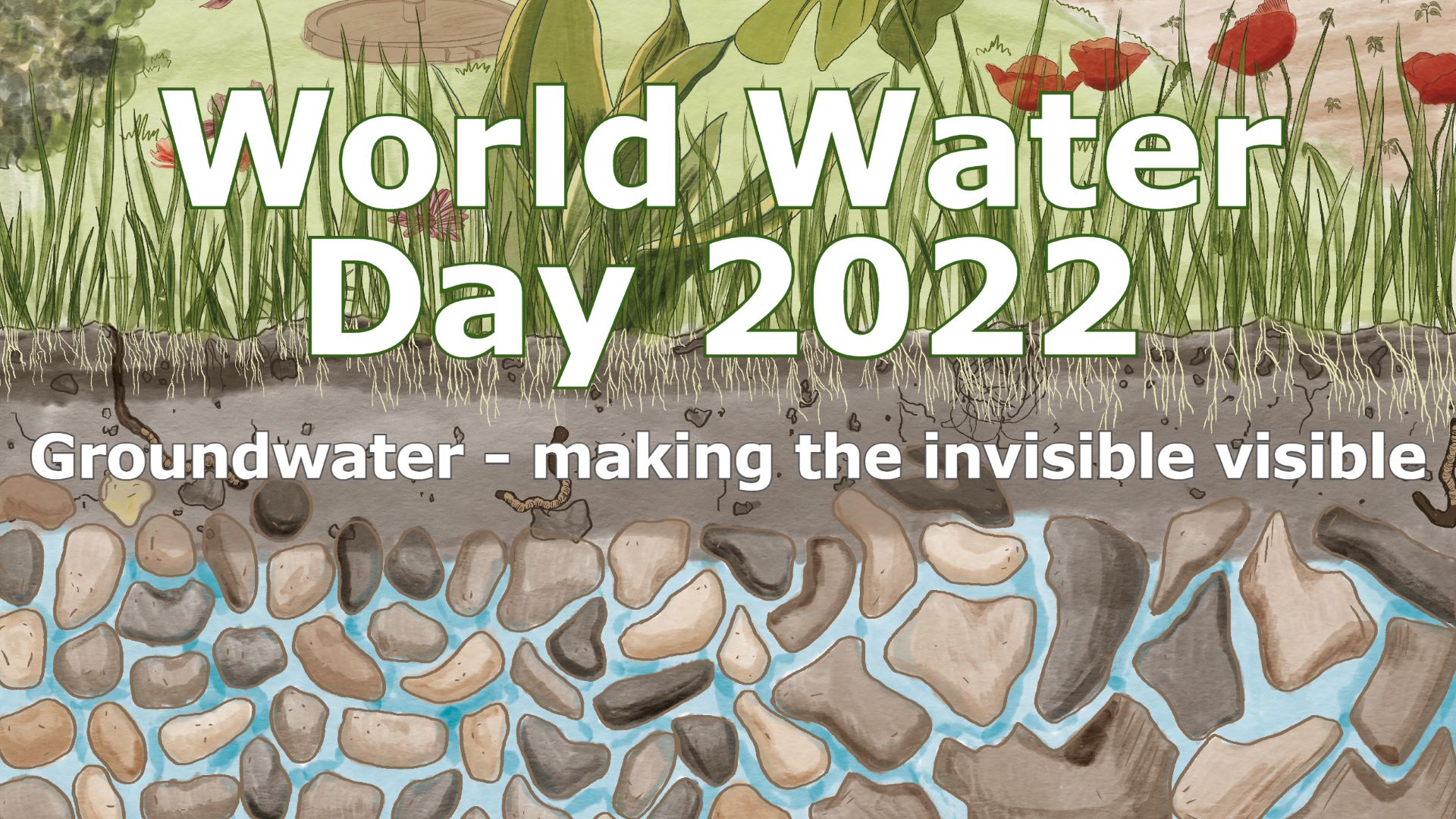
    Today is World Water Day, the 22 March highlights the importance of freshwater. The day is used to advocate for the sustainable management of freshwater resources. This years theme is “Groundwater – making the invisible visible” and explores the importance of groundwater.

    Worls water day 2022 graphic

    Water covers 75% of the earth’s surface, however only a very small amount is freshwater that can be used directly by people, animals and plants because:

    • 97% of this water is in oceans and is too salty for people, animals or plants to use
    • 2% is frozen at the north and south poles, in glaciers and on snowy mountain ranges
    • Only 1% is avaiable as freshwater in rivers, lakes and groundwater.

    Groundwater is invisible, but its impact is visible everywhere. Our drinking water and sanitation, our food supply and natural environment–all these rely on groundwater.

    Groundwater is critically important to the healthy functioning of ecosystems, such as wetlands. In deltas and coastal areas, groundwater also ensures the stability of the ground and prevents seawater intrusion under the land.

    Groundwater is invisible, but its impact is visible everywhere.

    Under our feet, groundwater is a hidden treasure that enriches our lives. 

    Almost all of the liquid freshwater in the world is groundwater.

    As climate change gets worse, groundwater will become more and more critical. 

    We need to work together to sustainably manage this precious resource.

    Groundwater may be out of sight, but it must not be out of mind. 

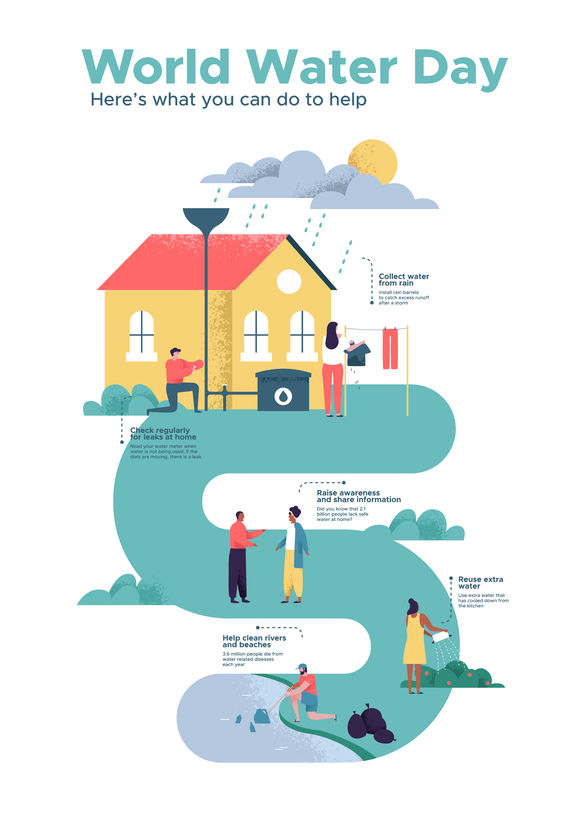
    World Water Day infographic

    Australian Environmental Education resources

    How to be Waterwise

    Water is essential for all life and is the most abundant substance on Earth, yet water scarcity is one of the biggest issues facing us today. Australia is the world’s driest inhabited continent and 2019 was the hottest and driest year on record

    The Urban Water Cycle

    The natural water cycle has been modified by people to ensure a constant water supply and the safe disposal of wastewater. The Urban Water Cycle incorporates the Water Supply System, Wastewater system and the Stormwater system.

    Why is Water Important

    Water is the most common substance found on earth, so why is it important? Water is essential for all forms of life and can dissolve nearly anything. It can exist as a gas (water vapour and steam), a liquid (water) and a solid (ice).

    Australian Environmental Education logo with dragonfly


    National Water Week

    National Water Week aims to build awareness around the value of water. Access to clean water is hugely important to our daily lives, and it’s down to all of us to protect our water environments and resources, and use water wisely.

    What is Water?

    Water is essential for all life and is the most abundant substance on Earth. Water covers 75% of the earth’s surface, however only a very small amount is freshwater that can be used directly by people, animals and plants. This issue with the available freshwater creates competing pressures for our water resources.

    Follow the journey of water down the river through the catchment to the sea. Think about the different land uses in your local catchment and the variety of impacts they have on our precious water resources.

    Education resources

    Australian Environmental Education has a range education resources to help you teach about the importance of water.

    Explore the importance of water, water usage and water saving ideas with the Every drop counts activity.

    Every drop counts, being water wise!

    Water moves through the environment by the Water Cycle. This activity investigates the journey of a river through the catchment. Follow water through the environment and explore the changes to water quality over time. This learning activity is the first part of a sequence of 5 individual learning activities focused on Catchment Management. 

    Australian Environmental Education logo with dragonfly

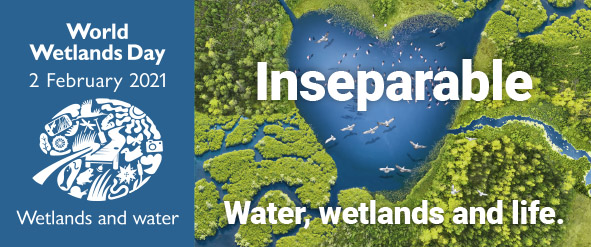
    World Wetland Day

    Celebrating 50 Years of the Ramsar Convention on Wetlands. This years theme is ‘Wetlands and Water’, highlights the role wetlands play in: clean water.

    World Wetlands Day is an international day celebrated each year on 2 February. The 2 February marks the anniversary of the signing of the Convention on Wetlands of International Importance in Ramsar, Iran, in 1971.

    The Ramsar Convention

    The Ramsar Convention aims to halt the global loss of wetlands and to conserve those that remain through wise use and management. Worldwide there are more than 2,400 listed wetlands of international importance.

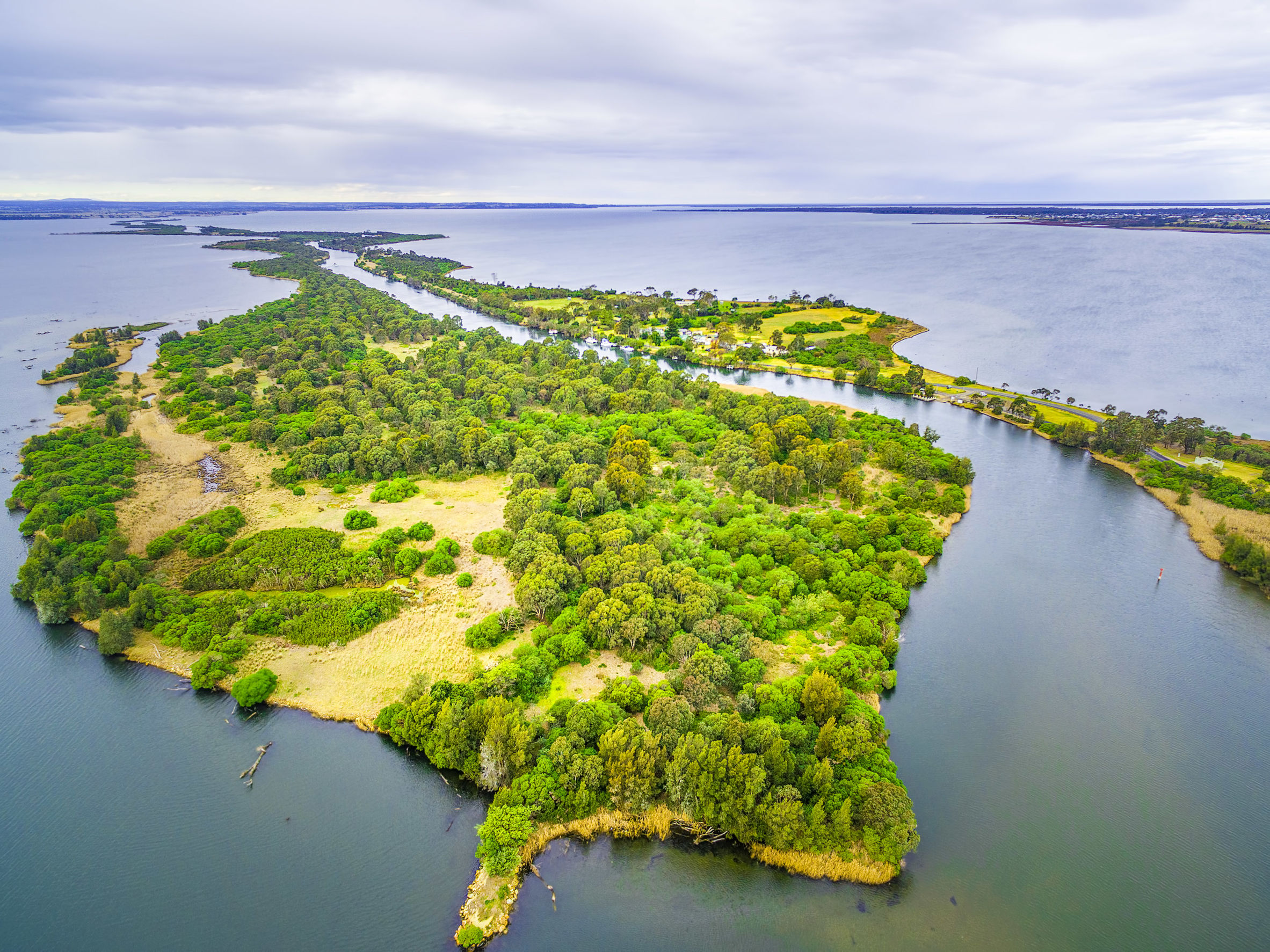
    In Australia there are 66 Ramsar sites wetlands of international importance covering about 8.3 million hectares. These sites include iconic wetlands such as Kakadu National Park, Roebuck Bay, Gippsland Lakes, Moreton Bay, Blue Lake, Macquarie Marshes and the Coorong.

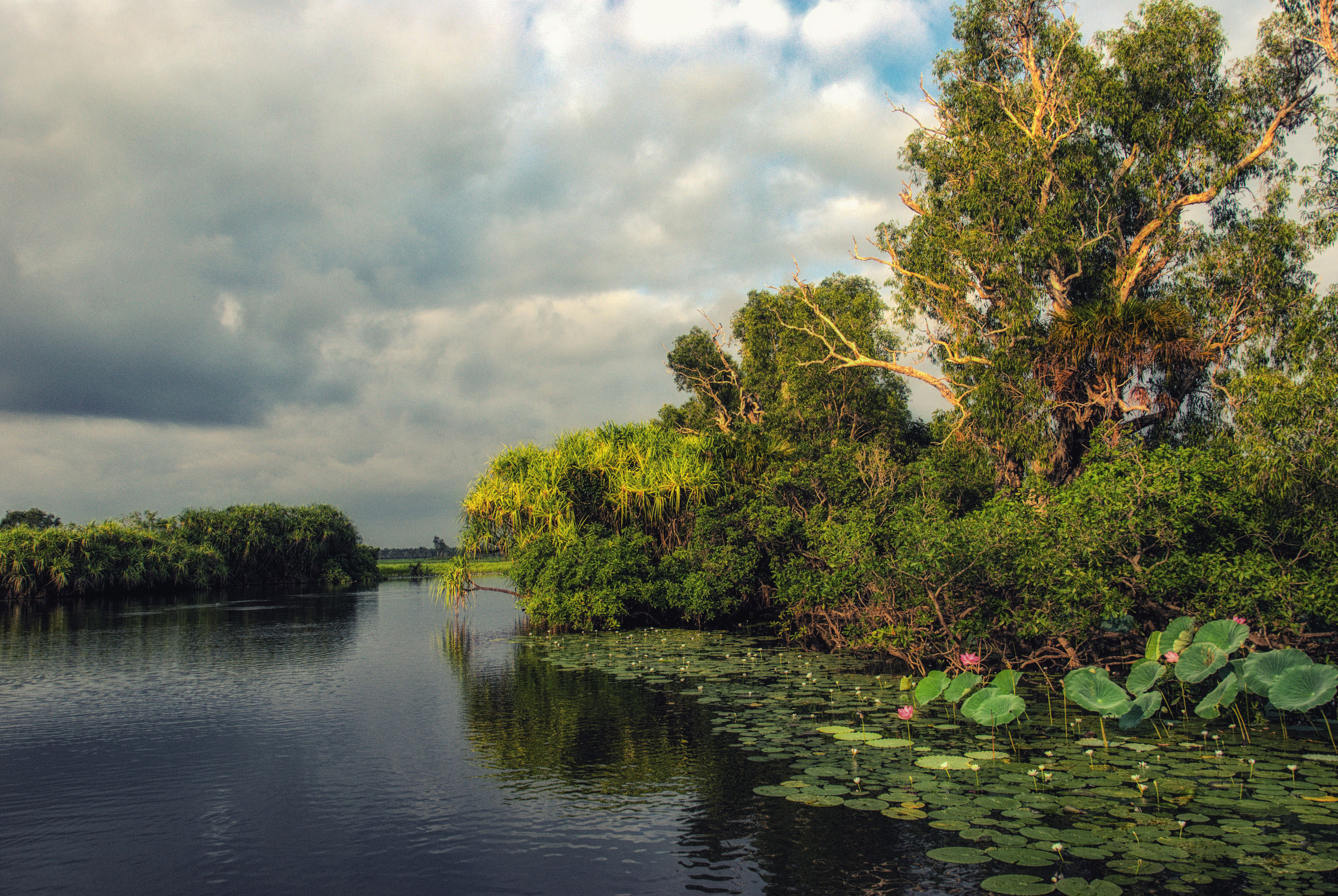
    Australia was one of the 5 founding nations to sign the Convention. In 1974 we designated the world’s first Ramsar Wetland, the Cobourg Peninsula in the Northern Territory. Australia continues to play an important role helping to manage and implement the Convention, within Australia and internationally.

    Wetlands are areas of land saturated or flooded with water permanently or seasonally. There are a variety of wetlands including:

    • Inland wetlands: marshes, peatlands ponds, lakes, rivers, floodplains, swamps, fens
    • Coastal wetlands: saltwater marshes, estuaries, mangroves, lagoons, coral reefs
    • Human-made wetlands: fish ponds, reservoirs, saltpans

    Find out more about the importance of wetlands and water

    The Natural Water Cycle

    The natural water cycle shows the constant movement of water around the world. Water moves through the processes of evaporation, transpiration, condensation, precipitation, run-off, infiltration and percolation.

    The Urban Water Cycle

    The natural water cycle has been modified by people to ensure a constant water supply and the safe disposal of wastewater. The Urban Water Cycle incorporates the Water Supply System, Wastewater system and the Stormwater system.

    Why is Water Important

    Water is the most common substance found on earth, so why is it important? Water is essential for all forms of life and can dissolve nearly anything. It can exist as a gas (water vapour and steam), a liquid (water) and a solid (ice).

    How to be Waterwise

    Water is essential for all life and is the most abundant substance on Earth, yet water scarcity is one of the biggest issues facing us today. Australia is the world’s driest inhabited continent and 2019 was the hottest and driest year on record

    Australian Environmental Education logo with dragonfly

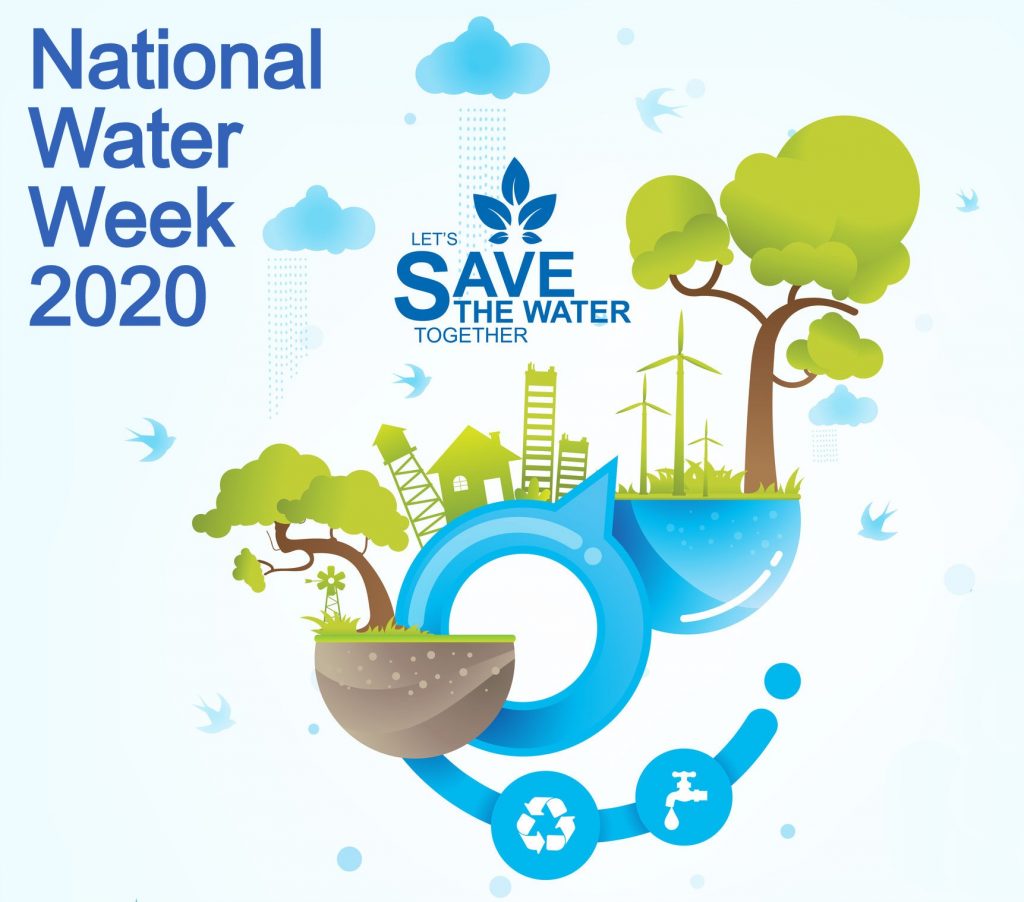
    National Water Week 2020

    The theme for National Water Week 2020 is Reimagining our Water Future. How can you reimagine the way you use and reuse water to ensure there’s enough of it in the future? Use these resources from Australian Environmental Education and beyond to rethink your current water practices. Remember what you do as an individual and as a communities can make a difference; every drop counts.

    Even though water is the most common substance found on earth, less than 1% is available as freshwater. We need to conserve and protect freshwater resources, consider your use of Water.

    Education resources

    Every drop counts, being water wise

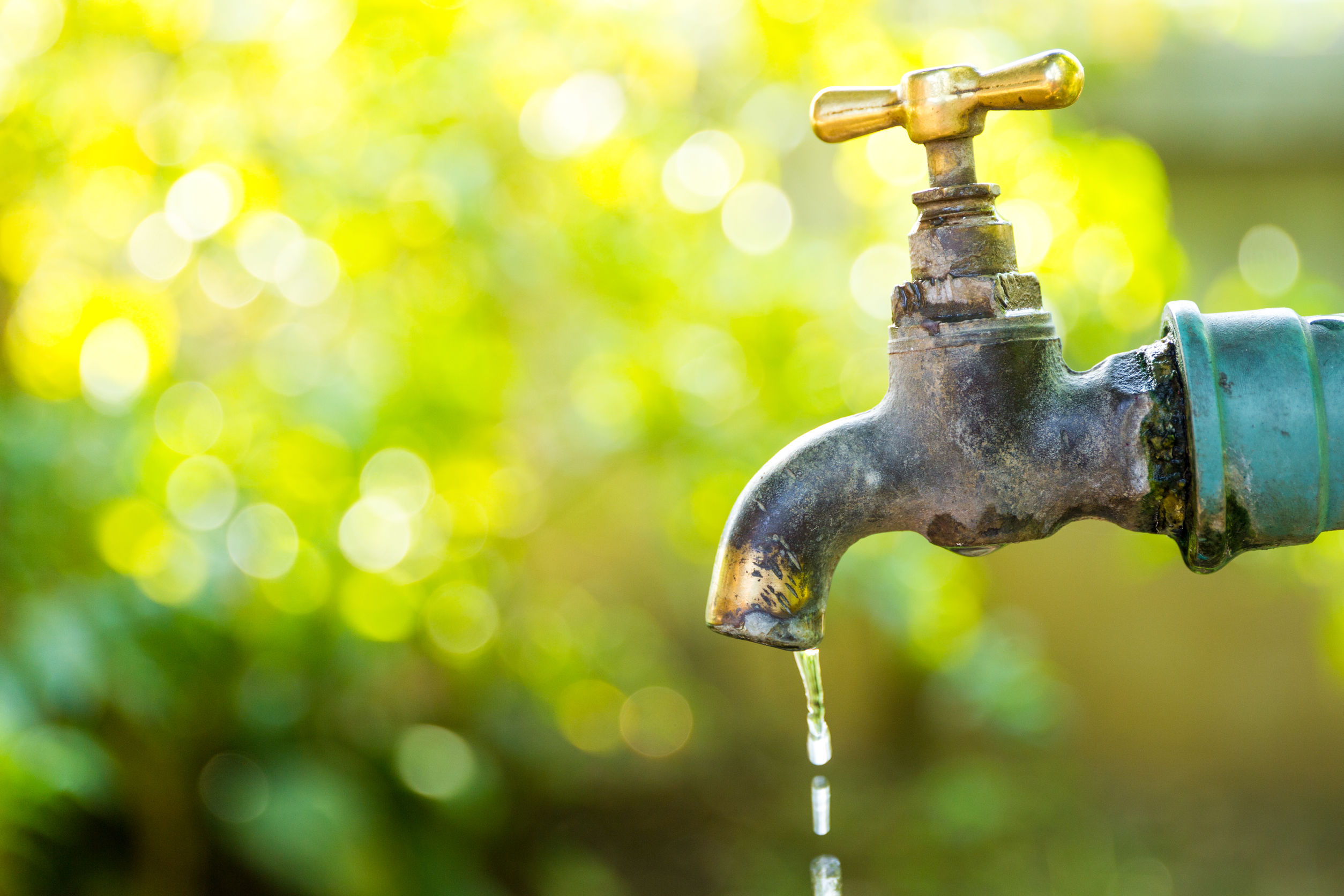
    Leaking tap © Chayatorn Laorattanavech 

    The Every Drop Counts learning activity explores the many ways that water is used, how you can reduce your water usage and reuse water.

    How to Be Waterwise

    Water is essential for all life and is the most abundant substance on Earth, yet water scarcity is one of the biggest issues facing us today. Australia is the world’s driest inhabited continent and has the lowest rainfall and the lowest water runoff. Most water is Australia is used in Agriculture reducing environmental flows.

    You can be part of the solution by looking at your water usage and exploring way that you can be more Waterwise.

    The Urban Water Cycle

    The natural water cycle has been modified by people to ensure a constant water supply and the safe disposal of wastewater. The Urban Water Cycle incorporates the Water Supply System, Wastewater system and the Stormwater system.

    Why is Water Important

    Water availability © normaals

    Water is the most common substance found on earth, so why is it important? Water is essential for all forms of life and can dissolve nearly anything. It can exist as a gas (water vapour and steam), a liquid (water) and a solid (ice).

    Australian Water Association

    The AWA has extensive list of educational resources that explore all the different aspects of water including the water cycle, the sustainability goals, Indigenous water knowledge, how to save water, caring for our catchments, and general water education.