
Living in Sydney, we are incredibly lucky to be surrounded by the sparkling waters of the Tasman Sea. Our harbor and coastline are the heart of our city, providing a place for recreation, reflection, and connection with nature. However, recent shark incidents in our local waters have understandably caused a ripple of concern through the community.
Before we dive into the science, it is important to pause and acknowledge the individuals and families affected by these events. My heart goes out to the victims; these are deeply distressing occurrences that touch us all as a community of ocean lovers.
While these recent events are frightening, it is vital to remember that fatal shark attacks in Sydney remain incredibly rare. To understand why we might be seeing more activity lately, we have to look at the bigger picture of our marine ecology and the wild weather we’ve been experiencing.
Sydney had seen significant rainfall and unusual water current patterns. Heavy rain washes nutrients and organic matter from the land into the estuaries and open ocean, creating a “smorgasbord” that attracts baitfish. Where there are large schools of fish, larger predators naturally follow. Combined with shifting water temperatures, these environmental factors can bring sharks closer to the shore than usual. It’s a reminder that the ocean is a dynamic, wild ecosystem and not a swimming pool.
Sharks with the most attacks in Australia since 1995.
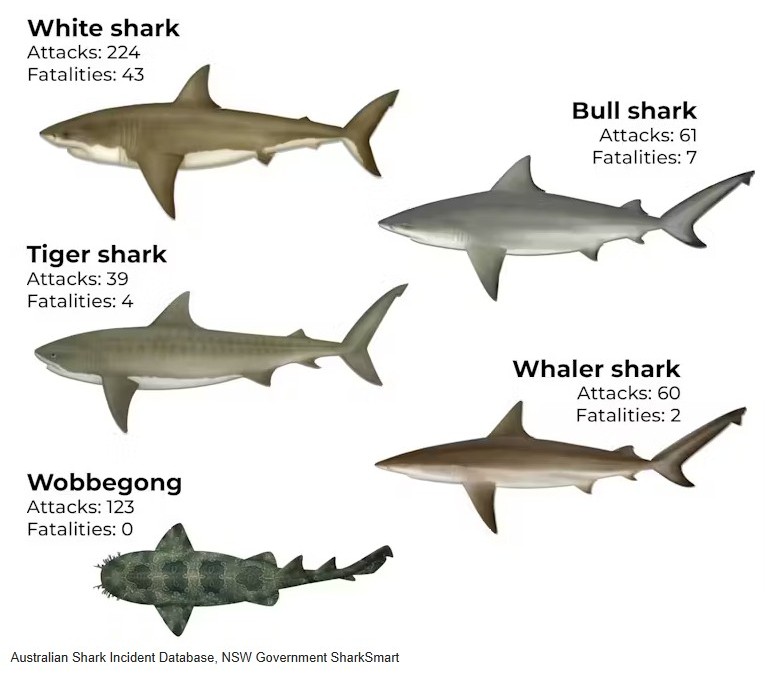
To help us understand the real risks in our waters, it’s useful to look at the data collected by the Australian Shark Incident Database. While the headlines can be scary, the numbers tell a story of rarity. When we look at the annual shark incidents per 100,000 people, the rate is incredibly low—generally staying well below 0.05. This means that even as our population grows, the likelihood of an encounter remains statistically very small. Interestingly, the data includes “provoked” incidents, such as when people touch or try to capture a shark, which reminds us that many of these interactions are preventable through respect and distance.
When we break down the species responsible for interactions since 1995, we see a clear distinction in behaviour. The White Shark has the highest number of incidents at 224, followed by the Bull Shark (61) and Tiger Shark (39). However, it is important to note that the Wobbegong—one of the sharks I often see while diving—is actually responsible for the second-highest number of interactions at 123. Crucially, there have been zero fatalities from Wobbegongs during this period, which highlights that an “attack” or “incident” is often just a defensive nipping or a case of mistaken identity in the surf.
Ultimately, these charts reinforce that the ocean is a wild space where we are guests. While the White Shark has been involved in 43 fatalities over the last 30 years, other common species like the Whaler Shark have a very low fatality rate (only 2 deaths out of 60 incidents). Understanding these statistics helps us replace fear with facts, allowing us to appreciate these magnificent creatures as a vital part of our marine ecology rather than something to be feared.
The Sharks I Know (and Love!)
As a SCUBA diver, I’ve spent countless hours below the surface, and I can tell you that most of the sharks we share our waters with are far from the “monsters” depicted in movies. In fact, seeing a shark on a dive is usually the highlight of the day!
When I’m exploring our local reefs, these are the neighbors I usually run into:
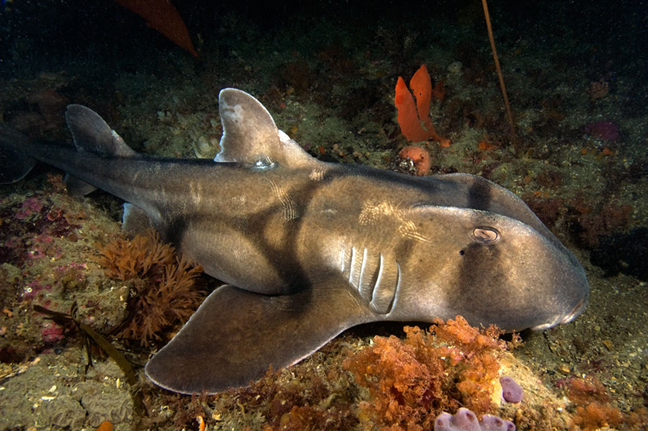
- Port Jackson Sharks: These are the quintessential Sydney locals! With their harness-like markings and blunt heads, they are docile bottom-dwellers. In the winter, you can find them congregating in rocky crevices to lay their spiral-shaped egg cases.
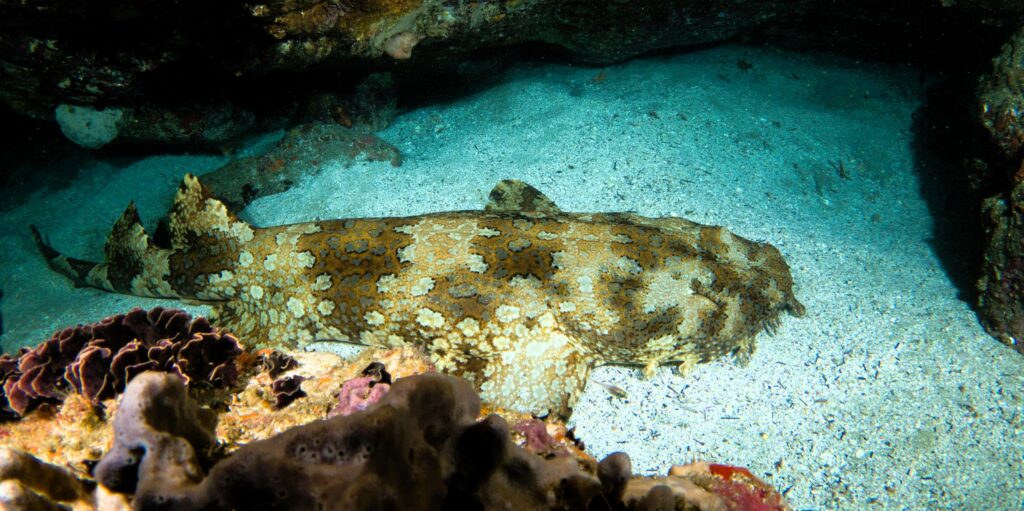
- Wobbegongs: These masters of camouflage look like a shaggy carpet (hence the name). They are incredibly relaxed, often found napping under ledges. While they deserve their space, they are a beautiful example of evolutionary adaptation.
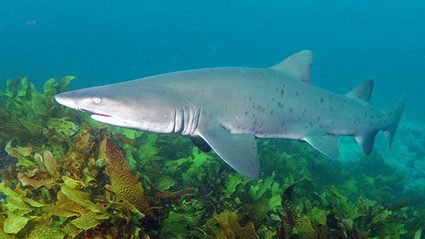
- Grey Nurse Sharks: Often called the “labradors of the sea,” these sharks look intimidating because of their protruding teeth, but they are actually quite placid. Sadly, they are a critically endangered species in New South Wales, and seeing one is a rare privilege that reminds us why conservation is so urgent.
The Importance of Protection
Sharks play a critical role as apex predators, keeping our marine ecosystems balanced and healthy. Without them, the entire food web can collapse.
Protecting our marine environment isn’t just about the sharks; it’s about preserving the incredible biodiversity of our “Great Southern Reef.” When we advocate for marine protected areas and reduce our impact on the water, we are ensuring that future generations can enjoy the same wonders we do today.
Be SharkSmart
We can respect the ocean while still enjoying it. Being “SharkSmart” means:
- Avoiding swimming at dawn and dusk.
- Staying clear of murky water or large schools of baitfish.
- Keeping an eye on local surf lifesaving alerts.
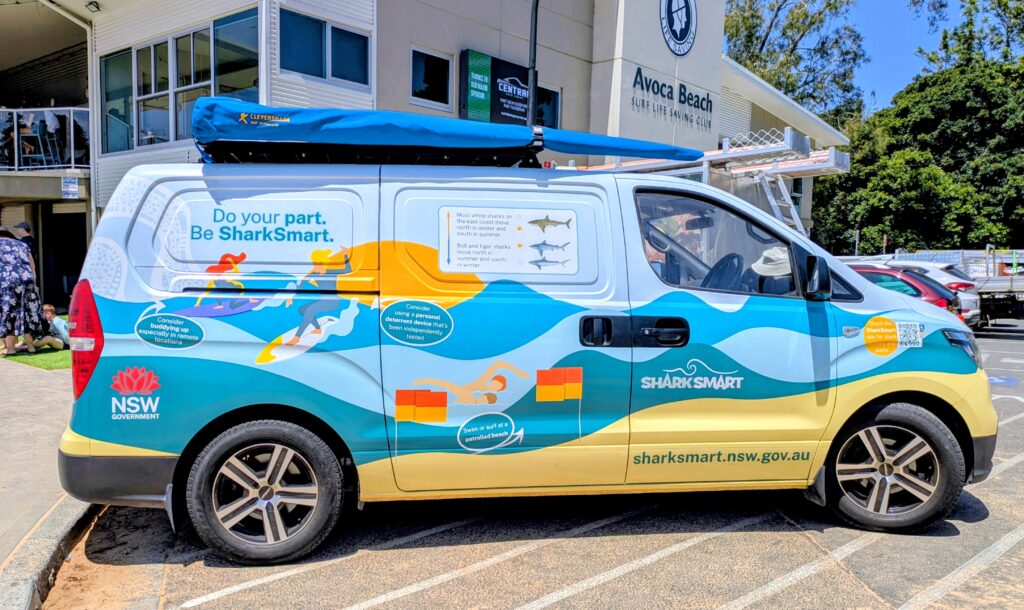
Look out for the SharkSmart vans, coming to a beach near you!
Find information and resources to help you reduce the risk of a close encounter with a shark at NSW beaches and estuaries.
The ocean is a place of wonder, mystery, and immense power. By understanding the ecology of our coastline and the behaviour of the animals that live there, we can move from a place of fear to a place of respect.
Let’s keep exploring, stay safe, and continue to be voices for our amazing underwater world.
Want to learn more about Sydney’s marine life? Explore my Marine Ecology programs for schools and community groups!