
Rockpools are miniature ecosystems formed in depressions along rocky shores. Left behind as the ocean retreats, these shallow pockets of water become temporary havens and biodiversity hotspots for an extraordinary array of marine life.
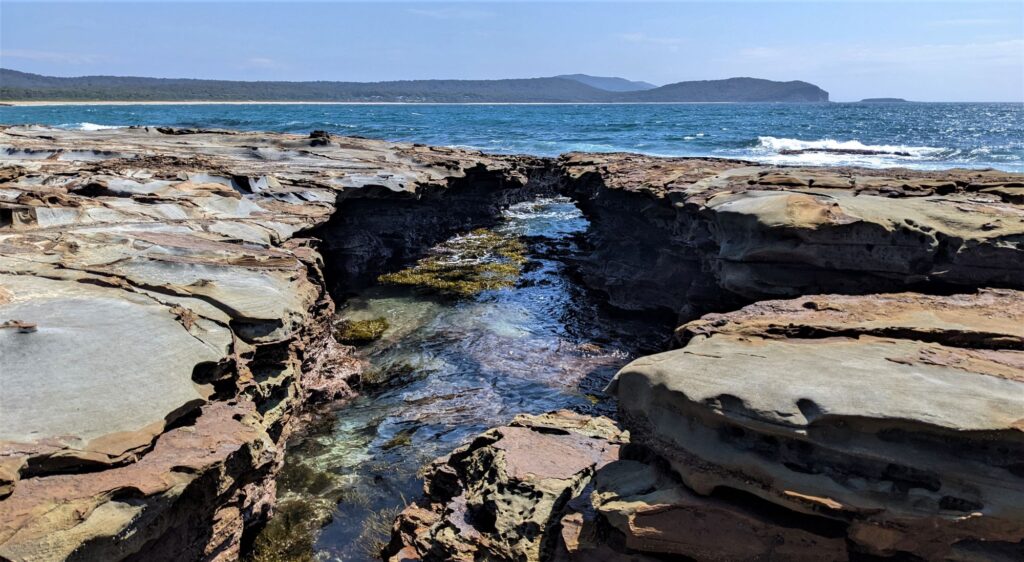
Life in the Extreme: The Intertidal Zone
Living in a rock pool is no easy task. The intertidal zone is the area of shoreline exposed at low tide and submerged at high tide. Creatures living here must contend with constant environmental changes:
- Temperature Spikes: Shallow pools warm up quickly under the hot Australian sun.
- Fluctuating Salinity: Heavy rain can dilute pool water with fresh water, while high evaporation increases salt levels.
- Wave Force: High tides bring crashing waves that threaten to wash organisms off the rock face.
- Oxygen Shifts: As trapped water warms, dissolved oxygen levels drop until the next incoming tide refills the pool.
Despite these harsh conditions, animals and plants along the NSW coast have evolved amazing adaptations to survive and thrive.
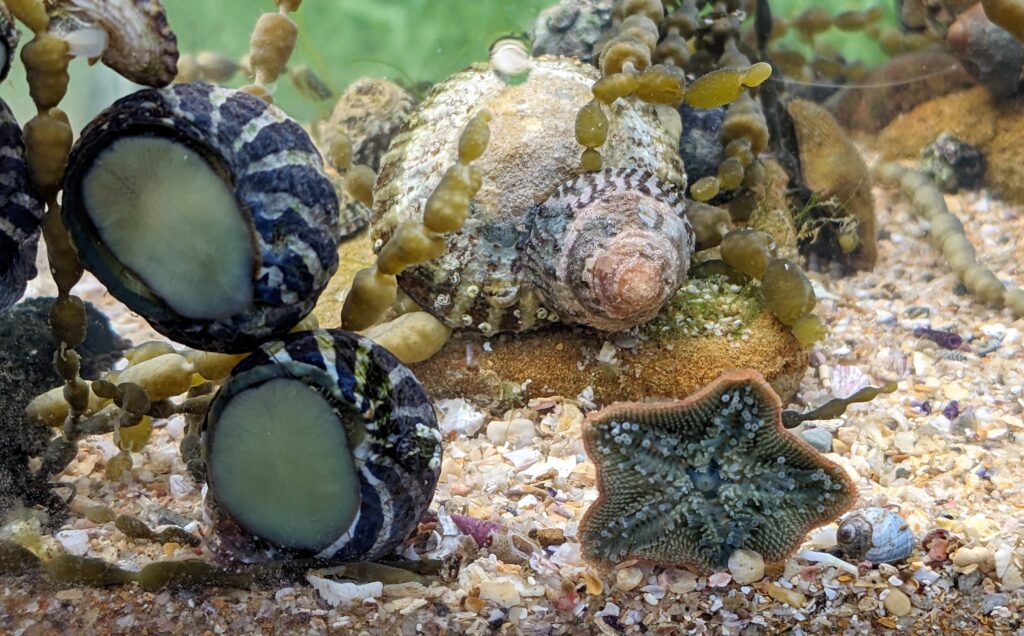
When you peer into a NSW rock pool, here are some of the fascinating organisms you are likely to spot:
Neptune’s Necklace
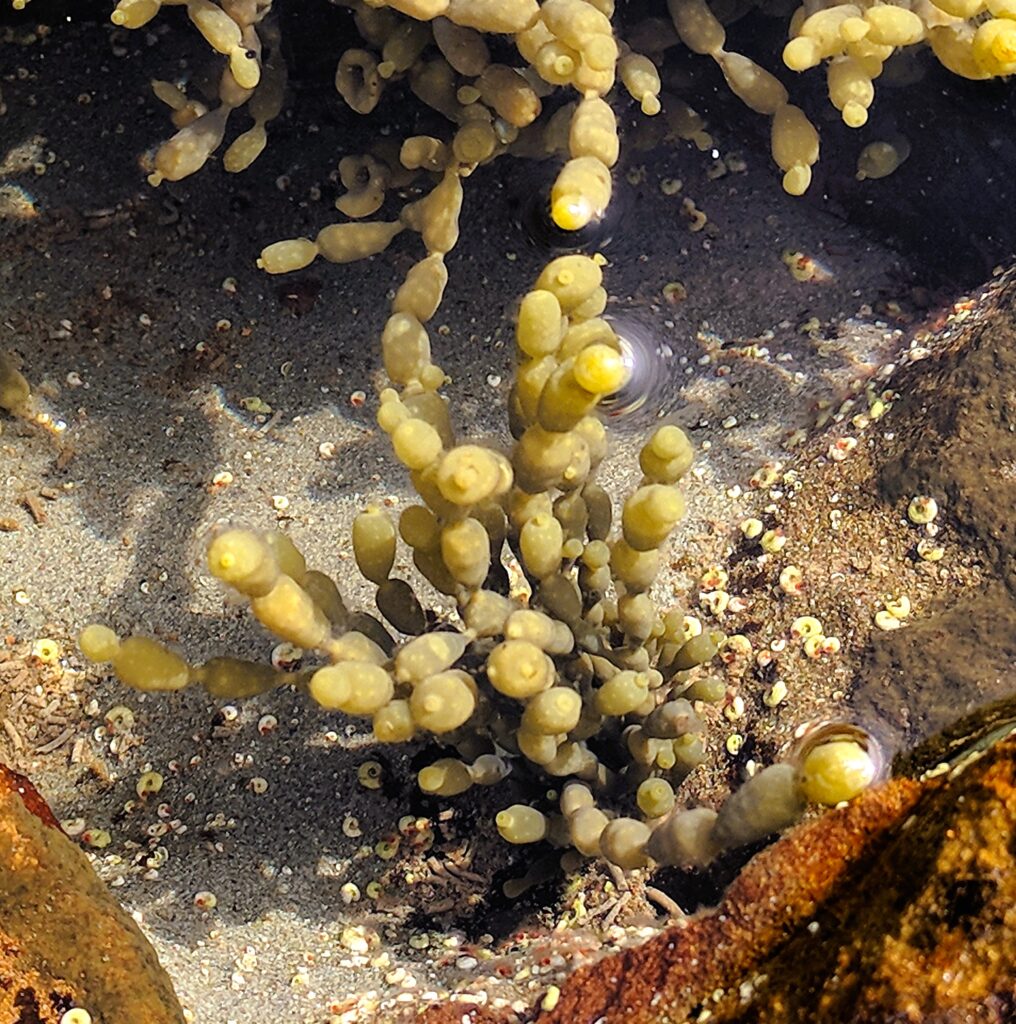
This greenish-brown seaweed looks like strings of water-filled beads attached to the sandstone platform.
Those hollow, water-filled bladders keep the plant moist when exposed to the air during low tide and help it float upright when submerged to catch sunlight for photosynthesis.
Waratah Anemone
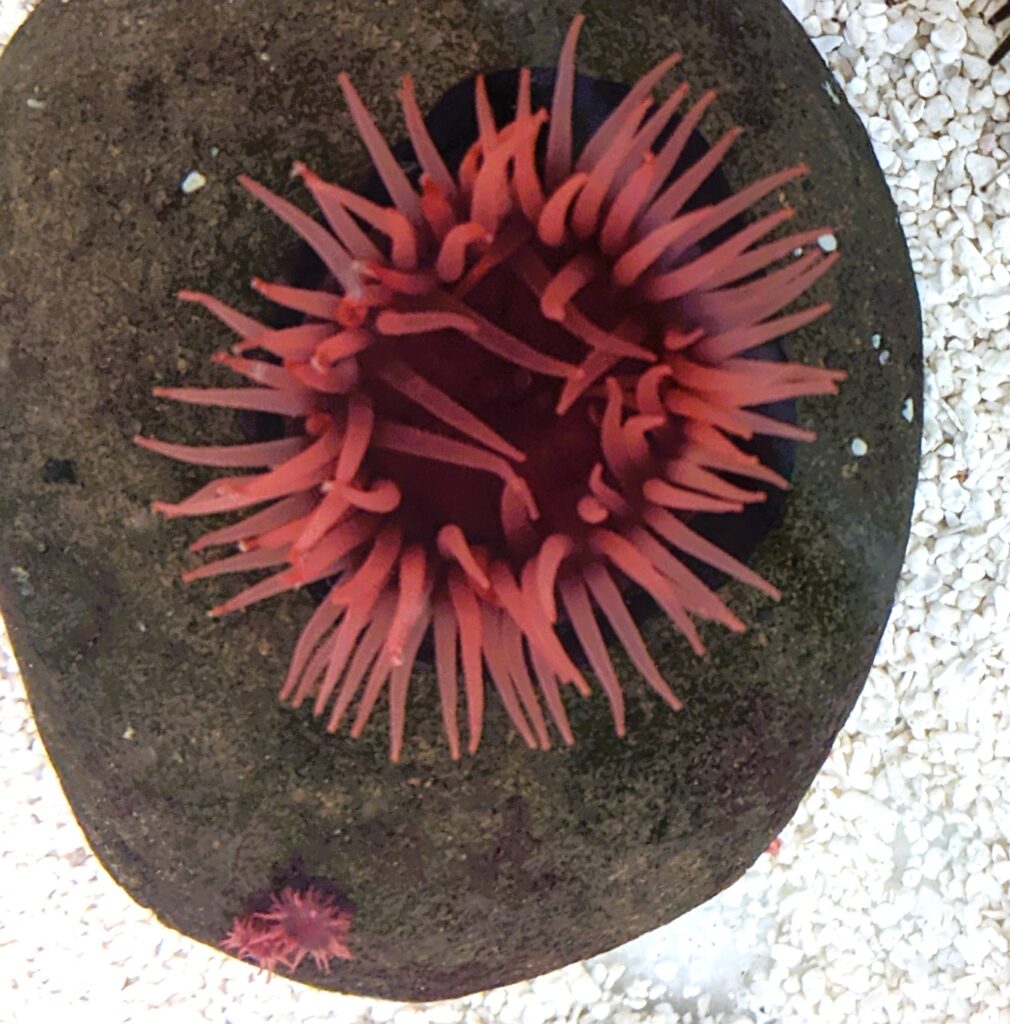
Named after the NSW state floral emblem due to its vibrant crimson color when open underwater, the Waratah Anemone is a spectacular predator.
At low tide, it draws its stinging tentacles inside its body, transforming into a glossy, jelly-like dark red blob to seal in moisture.
Sea Urchins
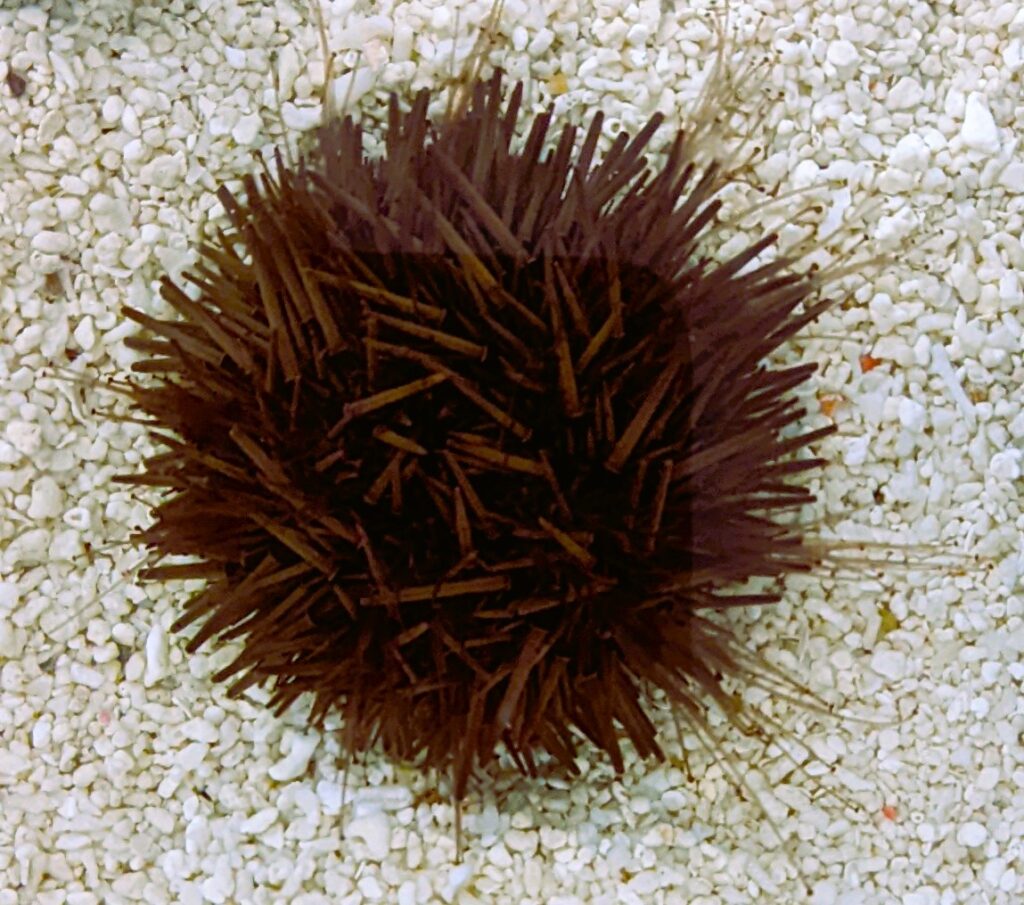
Sea urchins have a round, hard shell covered in sharp spines that keep them safe. They use suction tube feet to move around to find algae and hold on tight when waves crash.
During the day, they often pile bits of shell or seaweed on their backs to hide and block the sun. They also hide in deep cracks in the rocks
Cunjevoi “sea squirts”
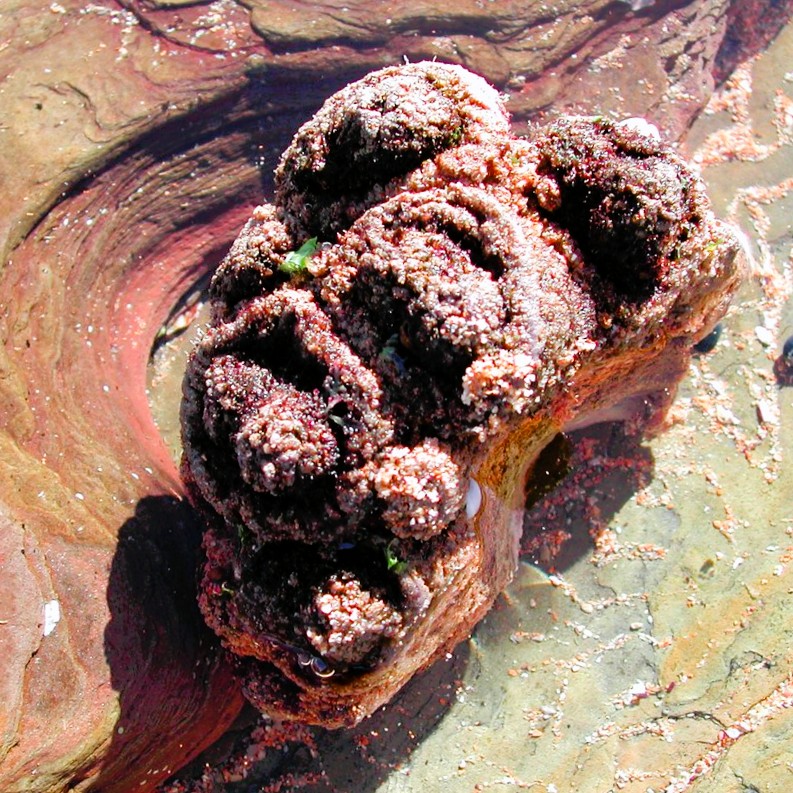
Cunjevoi carpet lower intertidal rock platforms. Encased in a leathery outer coat, they filter seawater for food. As the tide recedes, the Cunjevoi holds water to keep from drying out.
If stepped on or squeezed gently at low tide, they squirt jets of stored water!
Image: Andrew Donnelly © Australian Museum
Crabs
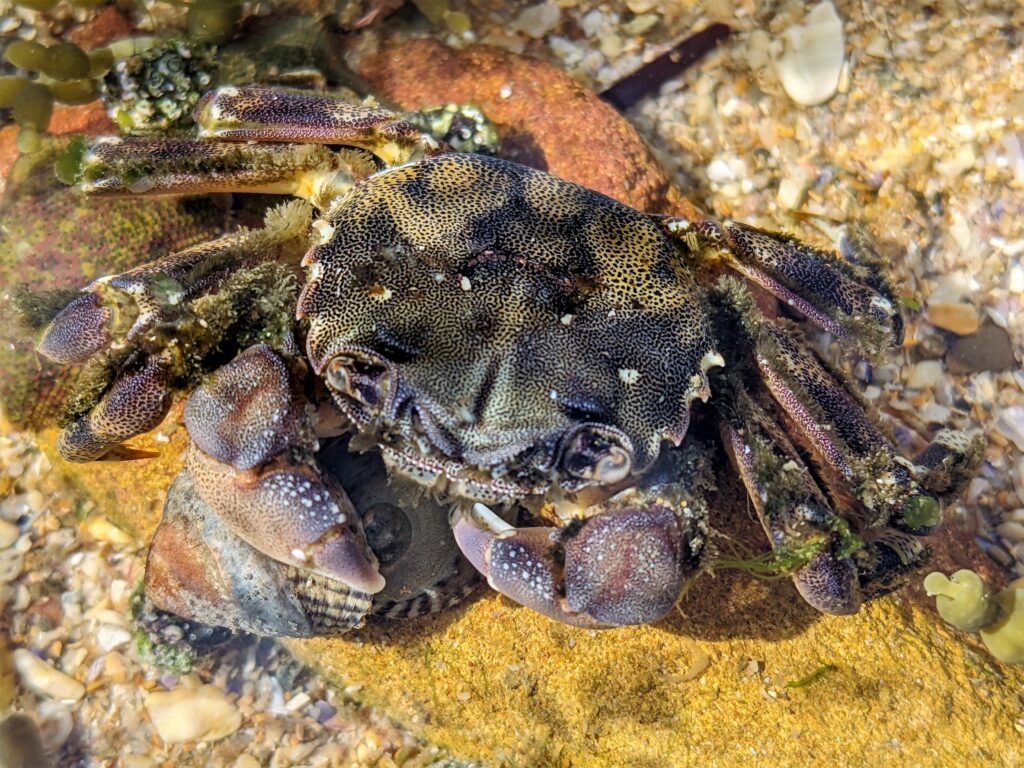
Crabs are crustaceans commonly found hiding in rockpools. They use hard outer shells for protection and sharp claws to feed on tiny bits of leftover marine life.
They can often be seen darting under ledges when disturbed.
Limpets
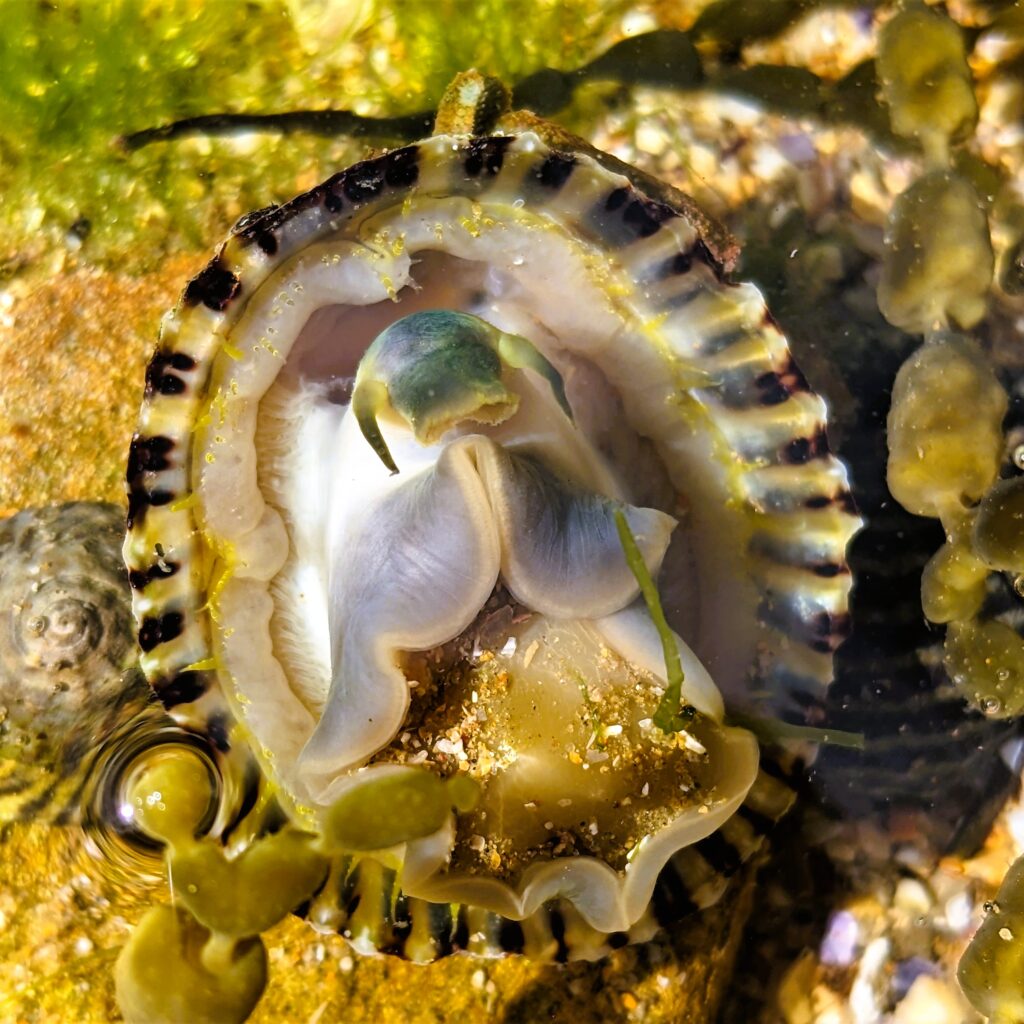
Grazer gastropods like limpets use a powerful muscular foot to anchor themselves tightly to the rock, resisting heavy wave action.
They hold onto rocks so tightly that air and water cannot escape, stopping them from drying out in the sun.
Carpet Sea Stars
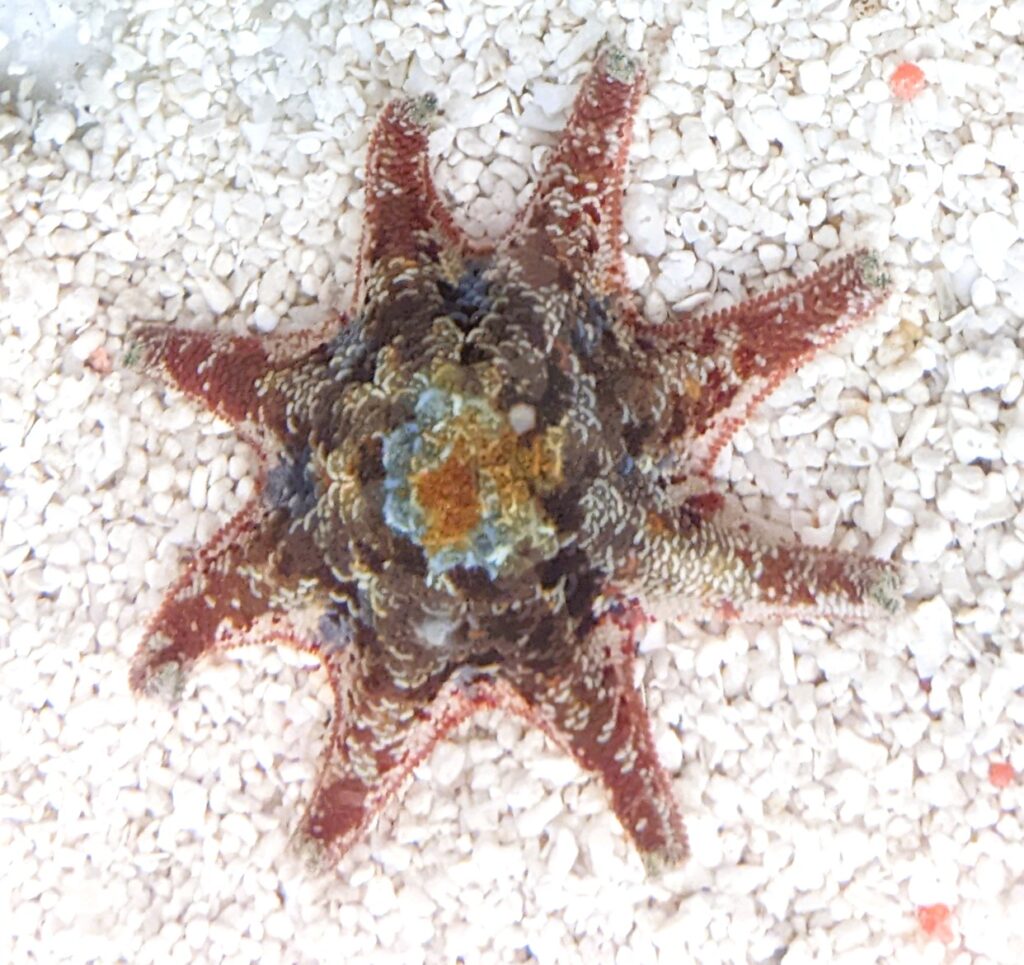
These small, flattened sea stars come in a rainbow of subtle greens, blues, and browns.
They move across the pool floor using tiny tube feet, feeding on micro-algae covering the rock surface.
Nature’s Coastal Nurseries
For many marine species, rock pools act as crucial nursery habitats. Small fish, crustaceans, and molluscs use these sheltered pools to feed, grow, and develop during the most vulnerable stages of their life cycles. The calm and shallow waters of rock pools provide an ideal setting for the early stages of life, allowing these marine creatures to grow and develop before venturing out into the open ocean.
How to Be a Mindful Rock Pooler
Exploring rock pools is a wonderful way to connect with coastal nature, build ocean literacy, and inspire curious minds. To protect these fragile marine habitats, follow these simple guidelines:
- Check the Tides: Always plan your visit during a falling low tide and keep an eye on incoming waves for safety.
- Tread Lightly: Wear sturdy, non-slip shoes with good grip. Avoid stepping directly on soft creatures like sea anemones or dense seaweed beds.
- Look, Don’t Touch: Keep your hands out of hidden cracks to protect both yourself and delicate marine life.
- Leave Rocks as You Found Them: If you carefully tilt a small loose stone to look underneath, gently place it back exactly as it was. Exposed eggs or creatures underneath can dry out quickly in the sun.
- Take Only Photos, Leave Only Footprints: Never remove living animals or plants from the rock platform.
Protecting our rock platforms ensures that future generations of ocean wildlife get a healthy start in life.
Get Out and Explore!
Next time you visit the coast, take a moment to pause at the edge of a rock platform. Bend down low, wait for the water to settle, and watch the busy world inside a rock pool come to life.
Another great way to explore out coastline is to go beachcombing and learn more about the animals that live on our coast. There are so many amazing things to look out for including shells, shark eggs, crabs, cuttlefish bone, seaweed, sponges, along with interesting rocks, sea glass and driftwood. You never know what you will find?