My dive the with Sharks

I just finished an amazing Scuba dive at Long Reef Sydney. The boat dive was booked specifically to see the Grey Nurse Sharks (Carcharias taurus) and we weren’t disappointed. The current was strong and as I peered over the edge of the rock wall into the gutter I saw at least 7 Grey Nurse Sharks.

As my eyes adjusted I began to see more detail as the sharks swam back and forth along the gutter. I was mesmerised watching this critically endangered species and wondered why these sharks create a panic with so many people. Is it their size, teeth or eyes that make people I speak to uneasy? The Grey Nurse Shark may be large and have a lot of sharp pointy teeth, but are not considered harmful to humans. The Grey Nurse Shark actually feeds on range of fish, other sharks, squids, crabs and lobsters which are pierced with these sharp teeth.

Watch this video to experience what it is like to be in the water with these beautiful animals.

I am always surprised when I tell people I dive, that one of the first responses is aren’t you worried about sharks? I find this strange because finding sharks on a dive is a highlight. Some trips are specifically planned to find sharks.

In the 25 years that I have been diving I have never felt afraid in the water. I show respect to all the marine life and dive to the conditions. I feel privileged to be part of this underwater world, especially when I find a shark.

Sharks I have seen in Sydney Waters

Grey Nurse Sharks Carcharias taurusThe east coast population is listed as critically endangered Current threats are believed to include: incidental catch from commercial fisheries, recreational fishing and the bather protection programs
Ornate Wobbegong Orectolobus ornatus VulnerableThe main threat to the wobbegong continues to be overfishing.
Spotted Wobbegong
Orectolobus maculatus
VulnerableThe main threat to the wobbegong continues to be overfishing.
Port Jackson
Heterodontus portusjacksoni
Listed as Least Concern on the World Conservation Union (IUCN) Red List, the egg cases have very high mortality rates (estimated at 89.1%).  Vulnerable to being caught as bycatch.
Dusky Whaler Carcharhinus obscurus Vulnerable Extremely susceptible to overfishing.

Did you know

  • Male Grey Nurse Sharks bite females during the courtship process. In the breeding season it is common to see small scars on the females
  • Sharks are able to swallow air at the surface of the water in order to give them buoyancy control
  • They have large, sharp teeth, but they are not very strong and break easily
  • The Grey Nurse Shark was the first protected shark in the world when it was protected under New South Wales legislation in 1984.

How you can help

Australian Environmental Education logo with dragonfly

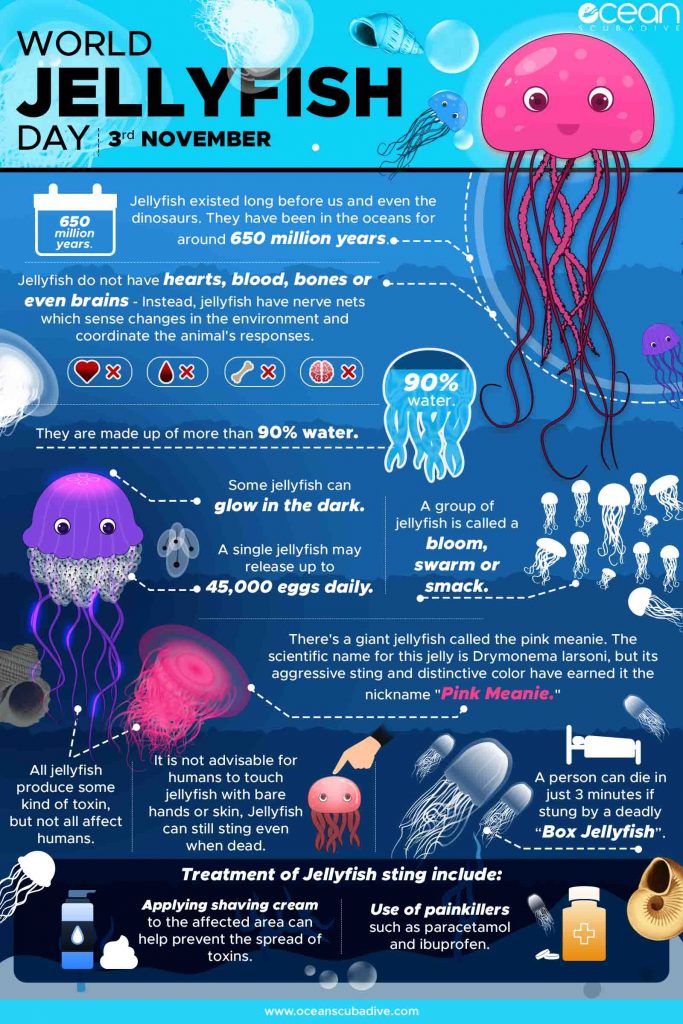
World Jellyfish Day

Jellyfish are in the phylum Cnidarians an ancient group of animals with a history of more than 650 million years. The word Cnidarian comes from the Ancient Greek: knide = nettle, named after a type of plant with stinging hairs. They have soft, hollow bodies, live in water and generally have tentacles.

Fun Fact: Moon Jelly can age backwards! They can revert back into polyp stage and then regrow into an adult again. Moon Jellies can also regenerate lost body parts.

Jellyfish: snack food of the sea

Jellyfish were once thought to be at the end of the food chain because they are have low nutritional content. New research shows that many species rely on Jellyfish as part of their diet including penguins, albatross, tuna, turtles, crabs and benthic microbes. Some animals even time their oceanic migrations to coincide with expansive jellyfish blooms like the Leatherback Turtle.

Concerns have been raised about the explosive growth of Jellyfish populations due to climate change, overfishing, nutrient runoff, and habitat modification. However this could be a positive in areas where fish and krill are in decline, as the importance of Jellyfish as a food source for marine animals will increase.

Find out more about these amazing animals

Did you know: the Bluebottle, Physalia utriculus is not a single animal but a colony? It is a colony of four kinds of zooids that are dependent on one another for survival.

  1. The float pneumatophore is a single individual and supports the rest of the colony.
  2. The tentacles dactylozooids are polyps concerned with the detection and capture of food and convey their prey to the digestive polyps.
  3. The digestive polyps gastrozooids breaks down the food
  4. The reproduction polyps gonozooids

Happy World Jellyfish Day

Uncropped AEE logo with dragonfly icon

Beachcombing – exploring our shores

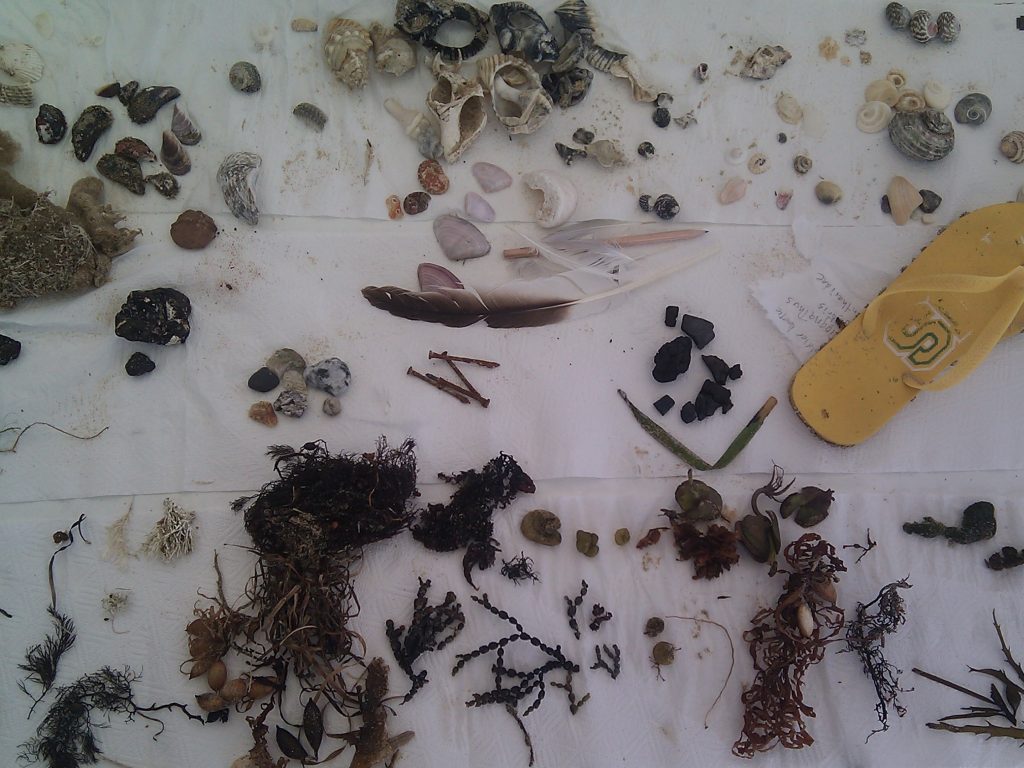
Beachcombing is a great way to explore our shores and learn more about the animals that live along our rocky shores, sandy beaches and mangroves. There are so many amazing things to look out for including shells, shark eggs, crabs, cuttlefish bone, seaweed, sponges, along with interesting rocks, sea glass and driftwood. You never know what you will find?

Beachcombing survey Bermagui

Here are a few ideas to help get you started.

  • Wear comfortable shoes, hat and sunscreen
  • Check the tides, the best time to explore is when the tide is going out
  • A great time to explore is after a big storm
    • Use caution and common sense as waves can still be big.
  • Bring a camera to record your discoveries
    • Use a scale to help identify the animals later
  • Check local restrictions on collecting shells and driftwood.
    • It is illegal to remove living animals or plants from the foreshore and rocky reefs in Marine Parks and National Parks
    • Remember hermit crabs are always needing to upgrade their shells
  • Bring a bag to collect rubbish to help keep our marine environment clean.

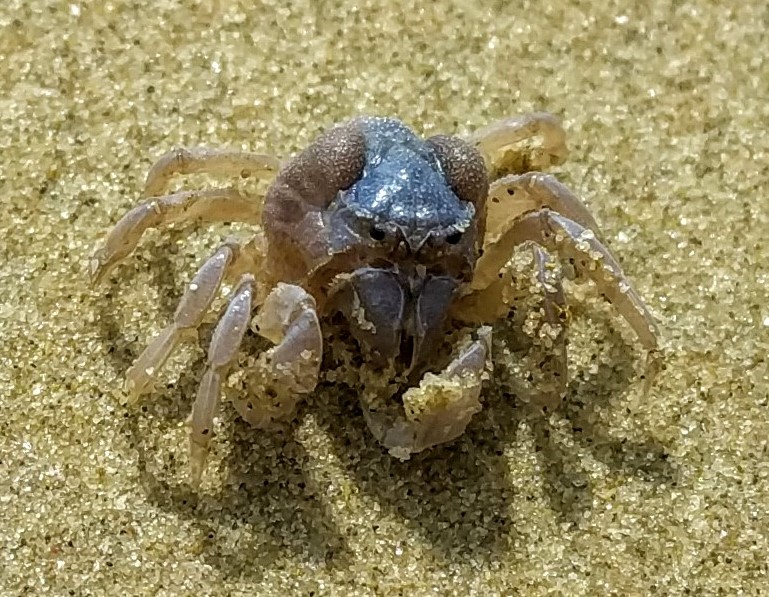
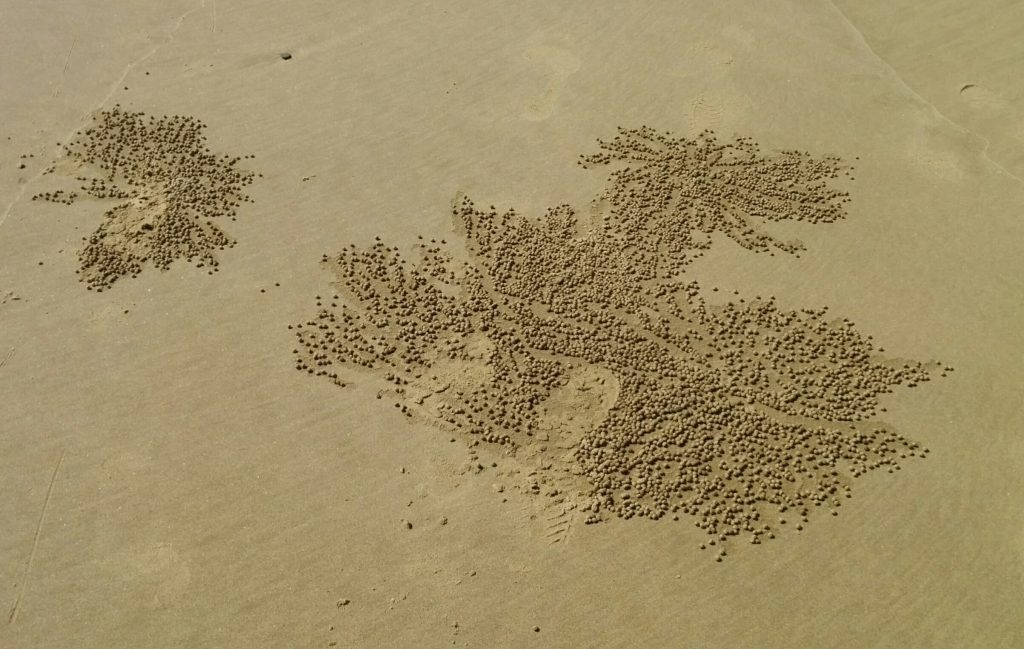
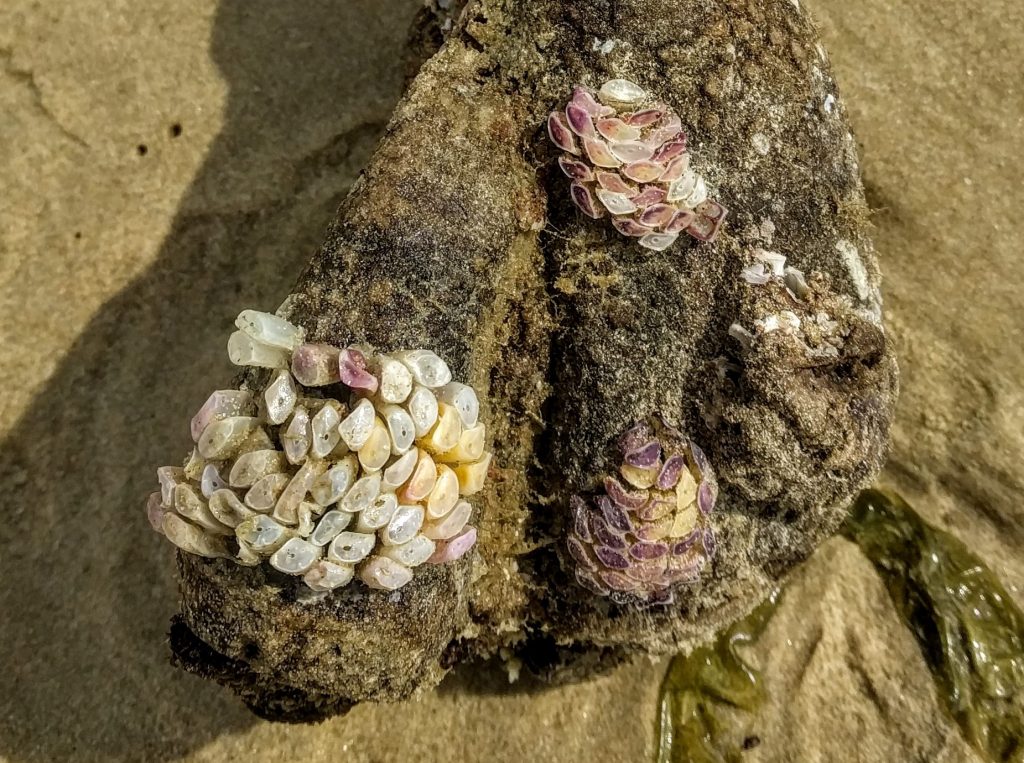
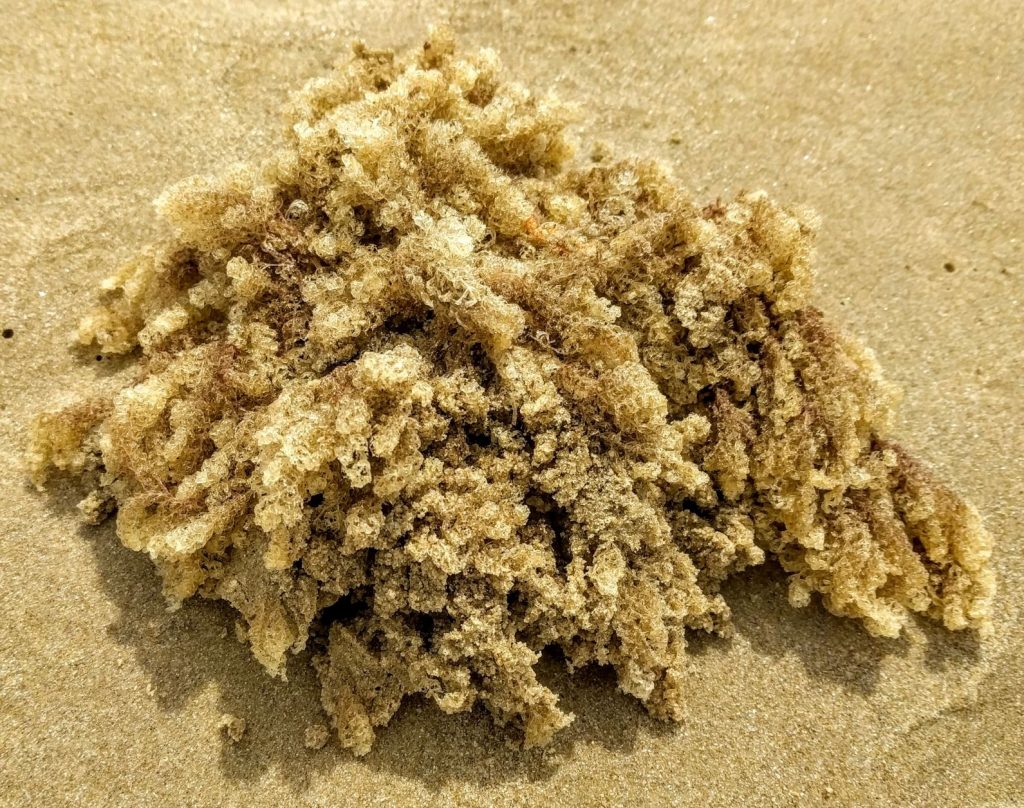
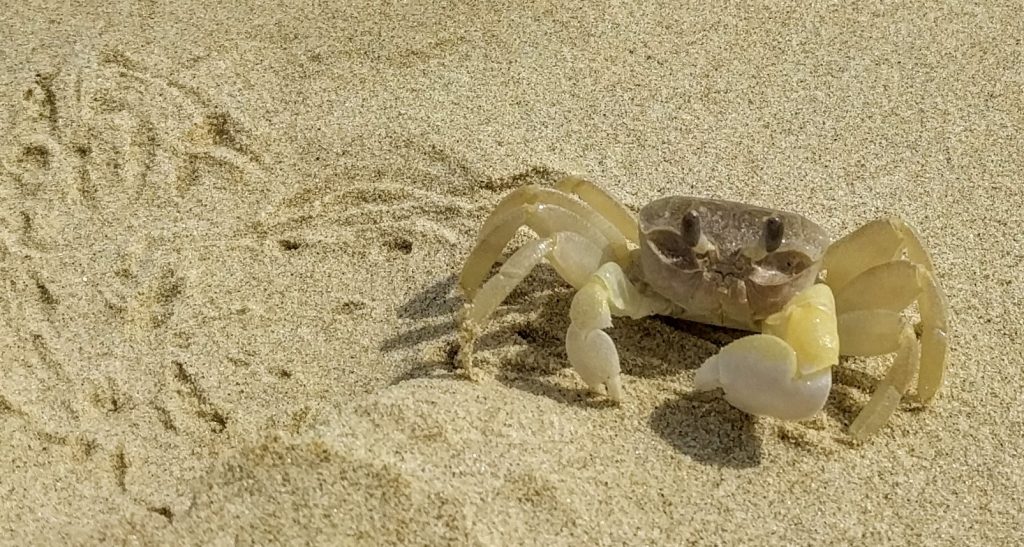
Below are some of the animals I found on a recent walk near Anna Bay in New South Wales, Australia. There were lots of shells, bits of driftwood and I was very lucky to photograph these crabs before they disappeared beneath the sand.

If you find something interesting or that you haven’t seen before, do some research. Using a Google image search is a great place to start. You can also contact the Australian Museum for species identifications. Make sure your image has a scale to help with identification https://australianmuseum.net.au/learn/species-identification/

The Pumice Raft is coming

Keep an eye out along the east coast of Australia for the arrival of the Pumice Raft between March and June 2020. Queensland University of Technology geologist Scott Bryan said pieces of pumice from the eruption of an underwater volcano near Tonga in early August 2019 would wash up on Australian shores in 7- 12 months. “When it gets here, the pumice raft will be covered in a whole range of organisms of algae and barnacles and corals and crabs and snails and worms,” he said. “We’re going to have millions of individual corals and lots of other organisms all coming in together with the potential of finding new homes along our coastline.”

You can record what animals you see along our shores at the Atlas of Living Australia

Christmas Beetles

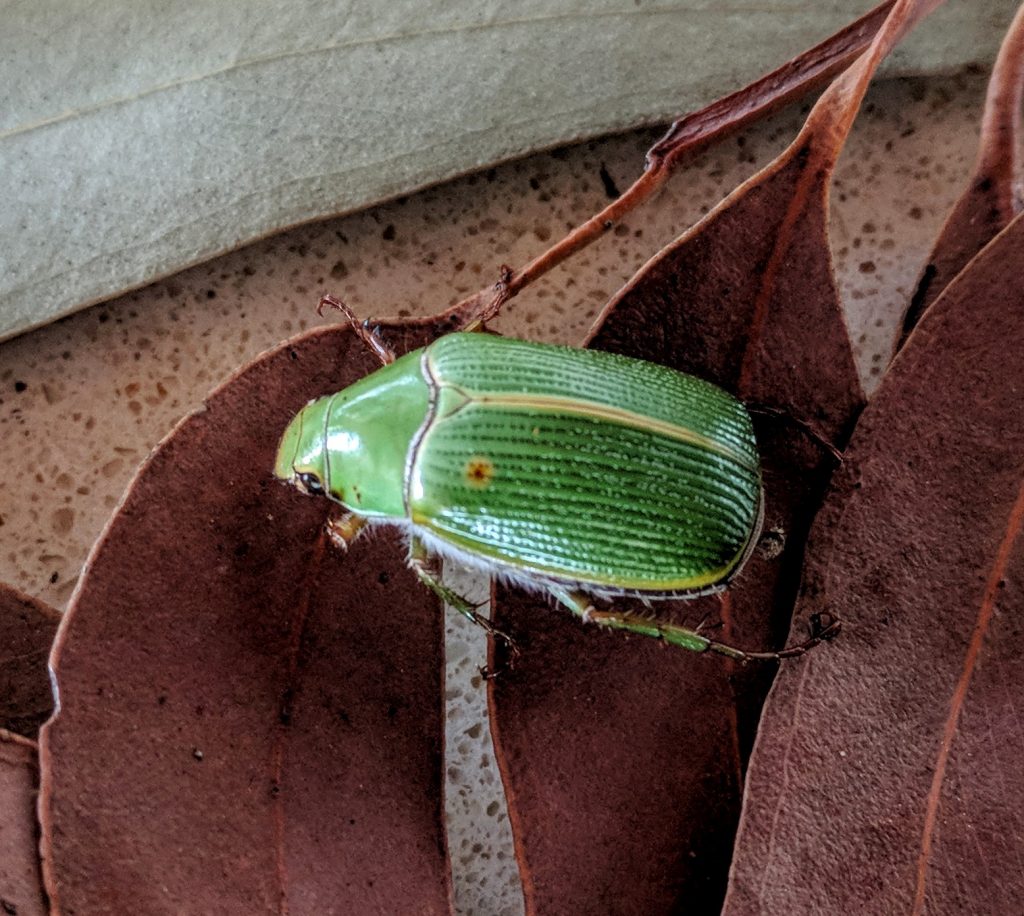
There are about 35 species of Christmas Beetles and they are in the family Scarabaeidae. Eight Christmas Beetle species are found in Sydney. Christmas Beetles are another sign that summer is coming and that Christmas is just around the corner.

Christmas beetle babies have c-shaped grubs that spend a whole year growing up in small chambers just underneath the surface of the soil. They eat plant roots and decaying organic matter.

Christmas beetles like:

  • Moist, but not too wet, environments.
  • Grassy woodlands.
  • Mature eucalyptus leaves.

Become a Citizen Scientist to discover the amazing diversity of Australia’s most famous beetles with Australian Museum identification guide! https://apps.apple.com/au/app/xmas-beetle-id-guide/id1180442876

Uncropped AEE logo with dragonfly icon