The Quaternary Period began 2.6 million years ago and continues right up to the present day. This is a period of “extremes.” It’s a time of massive ice sheets, the rise and fall of incredible giants and the story of how we, as humans, became part of the Earth’s history.
The Great Ice Age
When people think of the Quaternary, they often think of the “Ice Age.” Technically, we are still living in an ice age. During this period, the Earth’s climate has cycled between glacial (when it’s very cold and ice sheets grow) and interglacials (warmer periods like the one we are in now).
While the Northern Hemisphere was covered in massive glaciers, Australia didn’t have much ice. Instead, our climate became much drier and windier. The sea levels dropped so low that you could have walked from Victoria to Tasmania, or even across to New Guinea, over land bridges!
Meeting the Australian Megafauna
This was the peak of the Australian Megafauna. Imagine walking through the bush and coming face-to-face with:
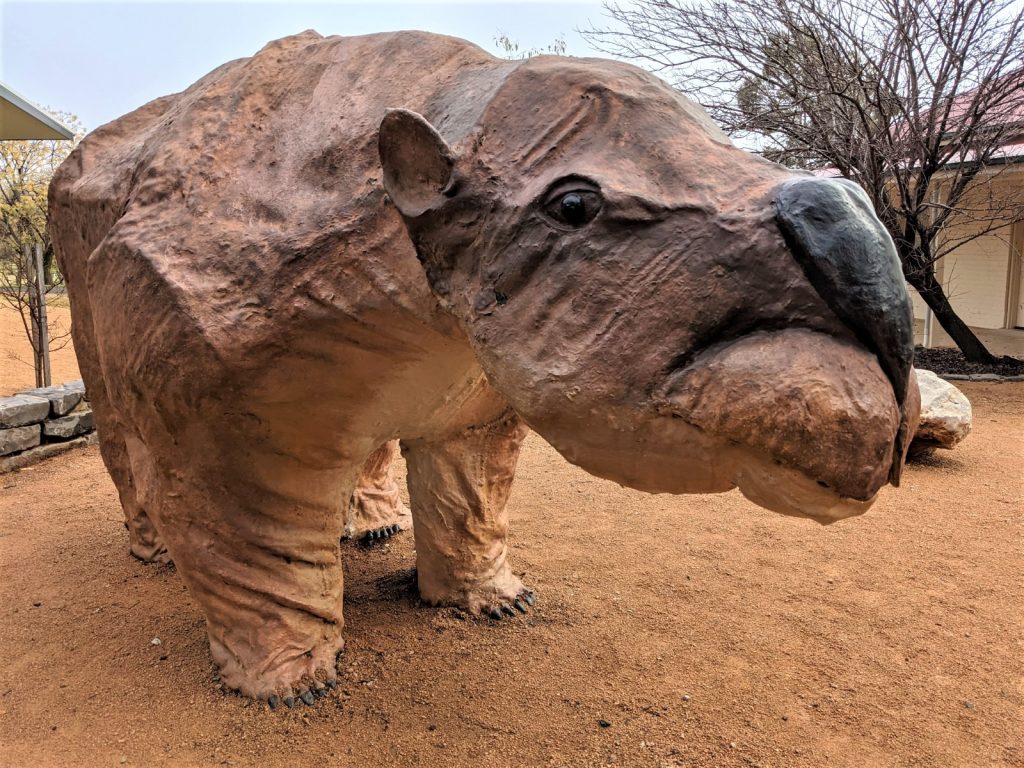
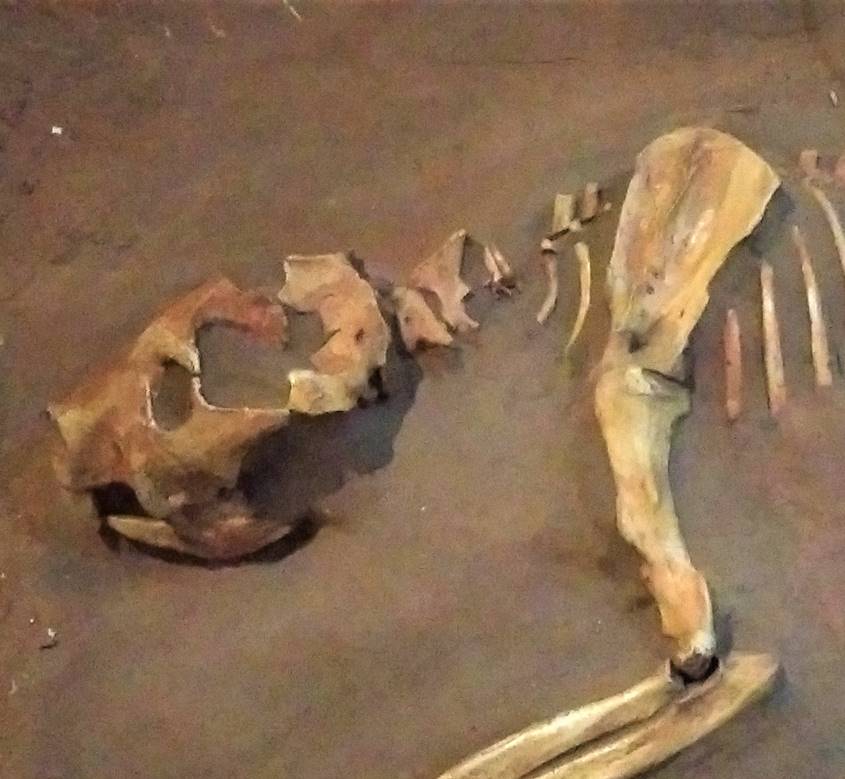
- Diprotodon optatum: The largest marsupial to ever live. It was the size of a rhinoceros and looked like a giant, snub-nosed wombat.
- Thylacoleo carnifex: The “Marsupial Lion.” It wasn’t a cat at all, but a powerful predator with bolt-cutter teeth and a deadly thumb claw.
- Procoptodon goliah: A giant short-faced kangaroo that stood 2 metres tall and, unlike modern roos, likely walked on two legs rather than hopping!
The Arrival of Humans
The most significant event in the Quaternary for Australia was the arrival of Aboriginal and Torres Strait Islander peoples. Evidence suggests they have been part of this landscape for at least 65,000 years, making them the oldest continuous living culture on Earth.
These first Australians lived alongside the Megafauna and witnessed the landscape change as the last great ice sheets melted and sea levels rose, flooding the land bridges and creating the coastline we see today. Their Dreaming stories often contain memories of these ancient animals and the changing sea levels, providing a living link to our Quaternary past.
The Holocene and Beyond
The last 11,700 years of the Quaternary is called the Holocene Epoch. This has been a period of relatively stable climate that allowed human civilisations to flourish.
However, many scientists now argue we have entered a new stage called the Anthropocene, because humans are now the primary force changing the Earth’s atmosphere, oceans, and biodiversity.
Why the Quaternary Matters
The Quaternary teaches us about resilience. It shows us how life adapts to rapid climate shifts—from freezing cold to desert heat. By studying the fossils of the Megafauna and the records left in the landscape, we can better understand how to protect the amazing wildlife we still have today.
Our journey through the Geologic Timescale might be over, but the story of the Earth is still being written every day!
Thank you for joining me on this journey! If you missed any of our previous stops, you can find the whole series—from the Cambrian to the Quaternary—on our Geologic Timescale page.
Keep exploring your backyard and the ancient world beneath your feet!