
The Ediacaran Period is an interval of geological time ranging 635 to 541 million years ago. During this time there was immense geological and biological change. There was a transition from a life largely dominated by microscopic organisms to a world swarming with animals. The fossils preserved in the ancient sea-floor at Ediacara record the first known multicellular animal life on Earth that predates the Cambrian.
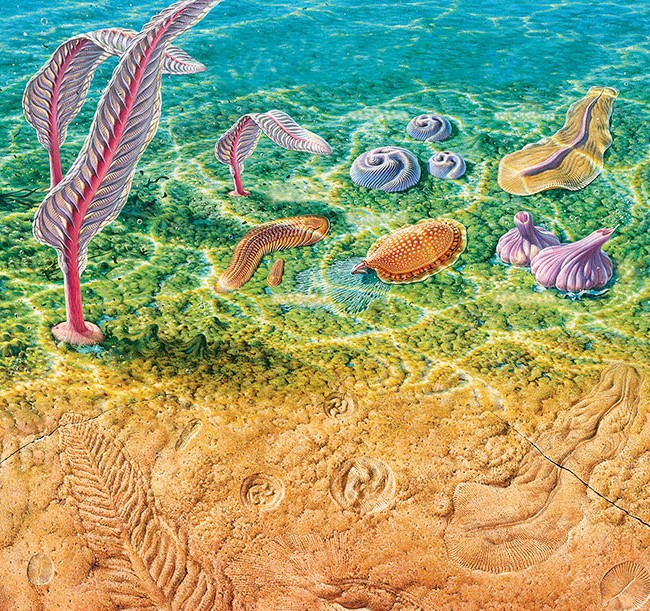
In 1946 geologist Reginald Sprigg discovered fossil imprints in rocks in the Flinders Ranges in South Australia at the old Ediacara minefield. The fossils were derived from soft-bodied organisms similar to modern-day jellyfish, lichen, soft corals, sea anemones, sea pens, annelid worms, and seaweed, as well as some organisms unlike any that are known today.
Watch PBS Eons: The Other Explosion You Should Know About
Fossils found around the world suggest that multi-cellular life was not only present before the Cambrian Explosion, it was much more elaborate and diverse than anyone thought. This is the story of the sudden burst of diversity that marked the dawn of truly complex life on our planet.
This discovery was the first time the fossilised remains of an entire community of soft-bodied creatures had been found in such abundance anywhere in the world. Sprigg’s discovery was so significant that fossils were named after him and the Ediacaran Period was named after the location where the fossils were found.
Find our more with Ginkgo Traces
The following video explores some of the most mysterious animals that ever existed on Earth. You’ll visit the deepest ocean depths and the vibrant shallows to look at life on Earth before the Cambrian Explosion.