
Australia hasn’t always been the isolated “Island Continent” we know today. Millions of years ago, it was the beating heart of a massive supercontinent called Gondwana. Understanding this ancient history is key to protecting our unique ecosystems today.
Gondwana formed through a series of massive continental collisions during the Pan-African orogeny, a mountain-building period, roughly 600 to 500 million years ago.
Pieces of what are now Africa, South America, India, and Antarctica slammed together, closing ancient oceans. Around 300 million years ago, Gondwana joined with a northern landmass called Laurasia to form the even larger supercontinent, Pangea.

By 180 million years ago, Pangea cracked in half, and Gondwana became its own distinct entity in the Southern Hemisphere once again.
During the peak of Gondwana’s existence, Australia was tucked firmly between East Antarctica and Greater India.
Australia and Antarctica remained joined long after Africa and India had drifted away. For millions of years, they shared a massive, lush temperate rainforest. There was no ice cap; instead, there were dinosaurs adapted to months of winter darkness and giant amphibians patrolling the riverbeds.
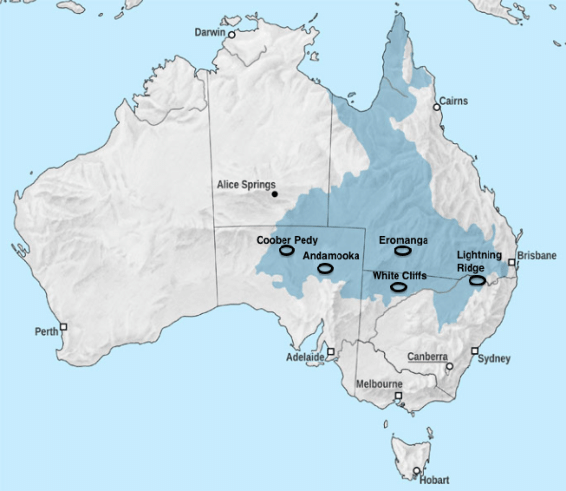
The Great Inland Sea
During the Cretaceous period (about 110 million years ago), much of central Australia was actually underwater. A massive Eromanga Sea divided the continent, which is why we find opalized dinosaur fossils and marine reptiles in the middle of the outback today.
The separation of Australia from Antarctica is one of the most significant events in Earth’s geological history because it changed the global climate.
Around 45–50 million years ago, the final land bridge between Tasmania and Antarctica was severed. As Australia drifted north, a gap opened up that allowed the Antarctic Circumpolar Current (ACC) to form. This cold current circled Antarctica, thermally isolating it and causing it to freeze over.
As Australia moved toward the equator into warmer, drier latitudes, the lush Gondwanan rainforests began to retreat, replaced by the fire-adapted Eucalypts and Acacias we see today.
Traces in the Rocks: Geological Proof
How do we know this happened? Scientists look at the “Matching Puzzle” across the southern continents:
| Geological Evidence | Description |
| The Glossopteris Flora | Fossils of this ancient seed fern are found in Australia, Africa, and South America—the seeds were too heavy to be blown across oceans, proving the lands were once connected. |
| Glacial Striations | Scratches in rocks in central Australia match those in India, showing they were once covered by the same massive ice sheet. |
| The Tasman Line | Deep-sea mapping shows the exact jagged edges where the Australian continental shelf once “zipped” into Antarctica. |
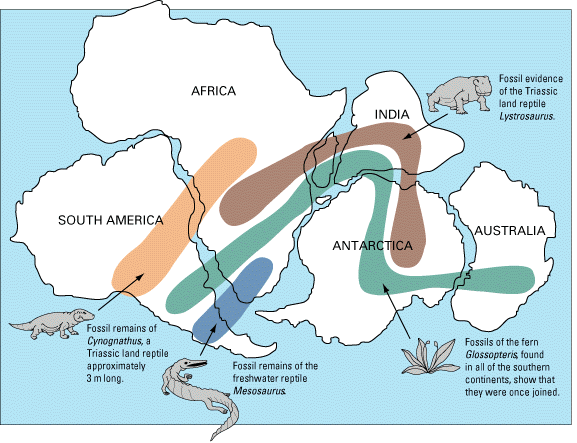
© USGS Fossil evidence of plate tectonics.. The locations of plants and animals fossils on present-day continents would form definite patterns if the continents are rejoined.
The “Gondwanan Legacy” in Australia
Why does Australia look so different from Europe or North America? Because our flora and fauna are living relics of this supercontinent.
| Species Type | Gondwanan Connection |
| Monotremes | Platypus and Echidnas are the world’s oldest mammals, once found across Gondwana. |
| Marsupials | While they originated elsewhere, they flourished in Australia after the split. |
| Antarctic Beech | These trees (Nothofagus) are found in Australia and South America, proving they were once neighbors. |
| Proteaceae | The family of Banksias and Waratahs has cousins in South Africa (Proteas). |
Why It Matters Today
Australia’s environment is fragile because it evolved in slow-motion. Our plants are adapted to nutrient-poor soils and ancient climate cycles.
Environmental Fact: The Gondwana Rainforests of Australia located across NSW and Queensland are a UNESCO World Heritage site. They contain the most diverse range of ancient ferns and conifers on Earth.
Threats to our Ancient Heritage
- Climate Change: Many Gondwanan species prefer cool, wet “refugia” which are disappearing as the continent warms.
- Invasive Species: Having evolved in isolation, many Australian species lack defenses against introduced predators and weeds.
- Habitat Loss: Urban sprawl threatens the remaining pockets of ancient rainforest.
The Modern Legacy
As a result of plate tectonics Australia is still moving north at about 7 centimetres per year, roughly the same speed your fingernails grow. We are currently on a slow-motion collision course with Southeast Asia.