The Carboniferous Period, lasted from about 359 to 299 million years ago. This period literally fuelled the modern world. Before we reached the dry deserts of the Permian, the Earth was a very different, very “green” place.
The name “Carboniferous” comes from the Latin word for “coal-bearing,” and for a very good reason—this is the time when the world’s most extensive coal beds were formed!
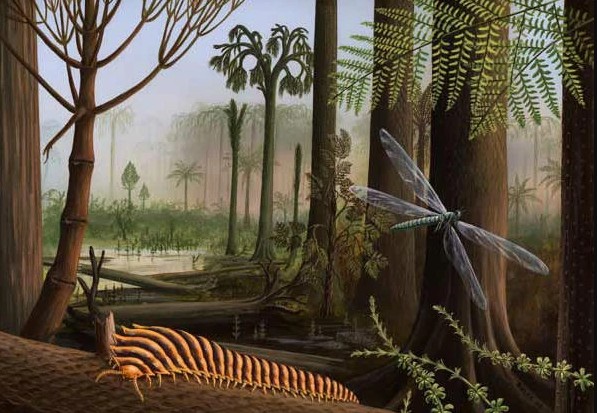
A World of Swampy Forests
Imagine a world where the land was covered in vast, steaming clubmoss swamps and towering forests of giant ferns. Unlike the trees we have today, these were ancient “scale trees” like Lepidodendron and Sigillaria, which could grow up to 30 or 50 metres tall!
Because these trees grew in swampy, low-oxygen environments, when they died, they didn’t fully decay. Instead, they were buried under layers of sediment and, over millions of years of heat and pressure, turned into the thick coal seams we find today.
The Oxygen Spike and Giant Bugs
One of the most incredible things about the Carboniferous was the atmosphere. Oxygen levels were much higher than they are today; estimated to be around 35%, compared to our current 21%.
This extra oxygen allowed insects and arthropods to grow to terrifying (or amazing!) sizes. During this time, you would have shared the air with:
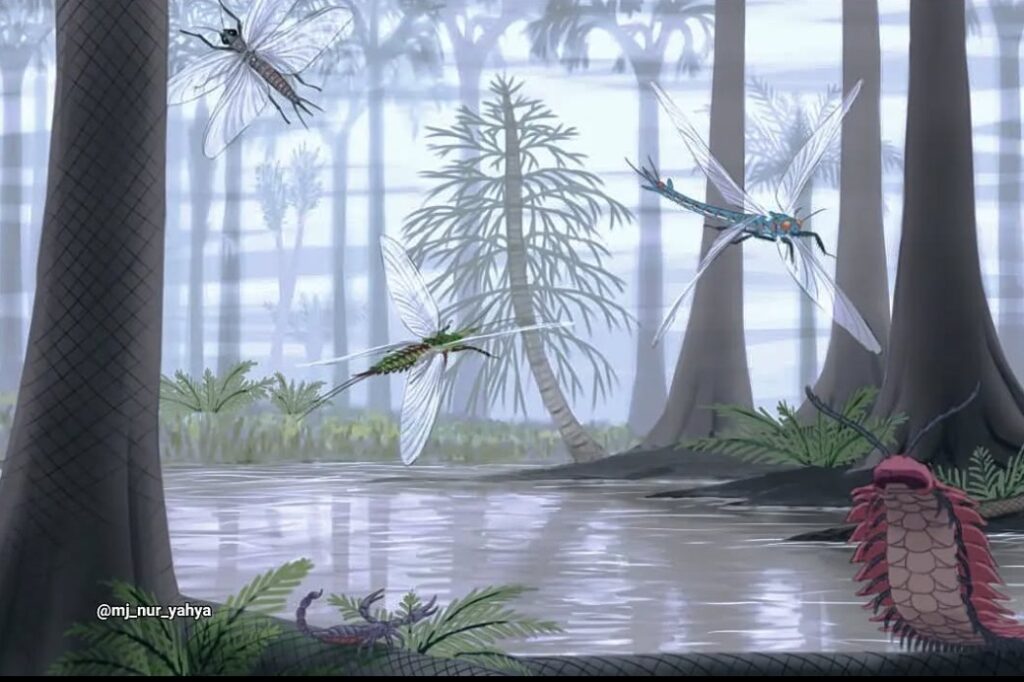
Meganeura: A giant dragonfly with a wingspan of up to 75 centimetres.
Arthropleura: A relative of the millipede that grew over 2.5 metres long!
Pulmonoscorpius: Giant scorpions that reached 70 centimetres in length.
Life on the Move: Amphibians and Eggs
The Carboniferous was a “coming of age” for land animals. While amphibians were the dominant land vertebrates, this period saw a major evolutionary breakthrough: the amniotic egg.
By developing an egg with a protective shell and internal membranes, early reptiles no longer had to return to the water to breed. This allowed life to move further inland and colonise new habitats, setting the stage for the rise of the reptiles in the following periods.
The Australian Connection: From Tropical to Tundra
In Australia, the Carboniferous story is one of dramatic change. Early in the period, parts of Australia (which was part of the supercontinent Gondwana) were located in more tropical latitudes, creating the environments that formed our coal deposits in places like the Hunter Valley in NSW.
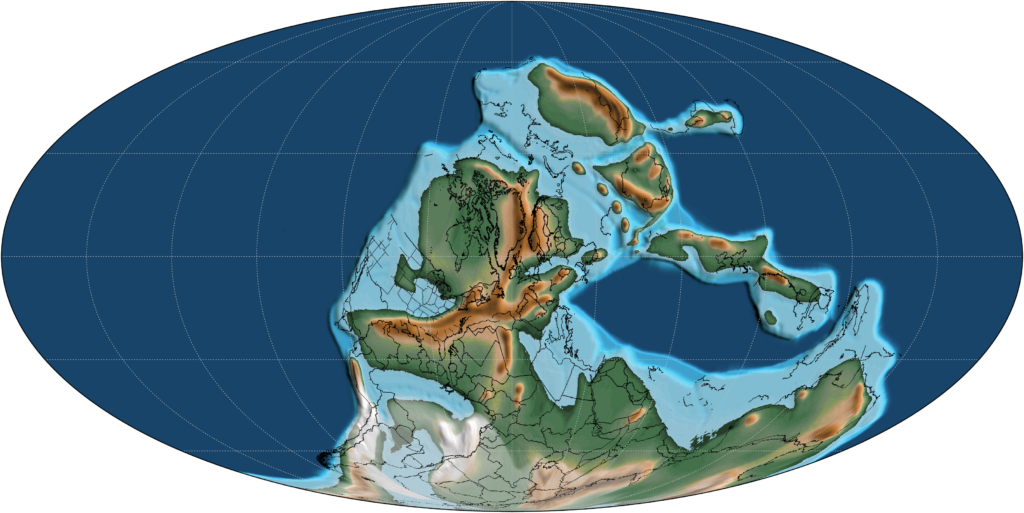
However, as the period progressed, Gondwana drifted further south toward the south pole. By the late Carboniferous, large parts of Australia were covered in ice and glaciers. We can still see rocks dropped by glaciers from this time in places like Hallett Cove in South Australia and parts of Victoria.
Find our more with Ginkgo Traces
Bring some sturdy boots and powerful insect repellent, because today you’re trekking through the mighty coal forests of the Carboniferous! Alien trees like lepidodendron have built up endless forests that have overtaken large parts of the planet, and the creatures that populate them are equally fascinating. From giant insects to temnospondyls, let’s explore the Carboniferous.
The Carboniferous reminds us how much the atmosphere and the position of the continents dictate what life looks like on Earth. The coal formed during this time has shaped human history, but it also serves as a massive store of ancient carbon. Releasing that carbon today is why we talk so much about climate change!
Want to see where we go next? You can find more about how these ancient forests paved the way for the Permian by visiting our Geologic Timescale hub.